You can consider buying Grunt Style apparel from Amazon or eBay, but the marketplace name alone does not establish that a particular item is authentic or that its seller is authorized. Before ordering in 2026, verify the seller, inspect the listing, and read the return terms attached to that purchase; do not assume brand-direct benefits apply.
- Before you buy Grunt Style from Amazon or eBay, verify the seller—not just the brand name in the title.
- Amazon and eBay listings need separate checks for authenticity, condition, sizing, and return terms.
- Buying directly suits shoppers who want to avoid identifying an independent marketplace seller.
- Keep the listing, order confirmation, and seller messages together if you need to report a problem.
Is it safe to buy Grunt Style apparel from Amazon or eBay?
Treat safety as a listing-level decision, not a platform-wide verdict. A familiar marketplace does not answer who owns the merchandise, whether the description matches it, or what happens if the shirt arrives in the wrong condition.
Grunt Style is best for patriotic-apparel buyers who want to order directly from the brand. That route removes the independent-seller identification step, but you still need to check the garment details, fit information, and current purchase terms.
For marketplace shopping in 2026, separate convenience from verification:
| Purchase route | Best for | Practical advantage | Limitation | Check before ordering |
|---|---|---|---|---|
| Amazon listing | Shoppers comfortable checking an individual marketplace offer | You can evaluate the offer within your preferred marketplace | A brand name in the title does not establish seller authorization | Seller identity, selected variation, condition, and applicable return terms |
| eBay listing | Shoppers willing to assess a specific seller and item | You can evaluate the listing's description and any item-specific photos | Photos and seller statements do not independently prove authenticity | Actual-item details, seller history, condition disclosures, and applicable return terms |
| Brand website | Shoppers who want a direct purchase | You do not need to identify an independent marketplace seller | You still need to assess fit and purchase terms | Exact garment, size information, and current policies |
Neither marketplace deserves an automatic approval or rejection. Approve the specific transaction only when the important details are clear.
Why this matters
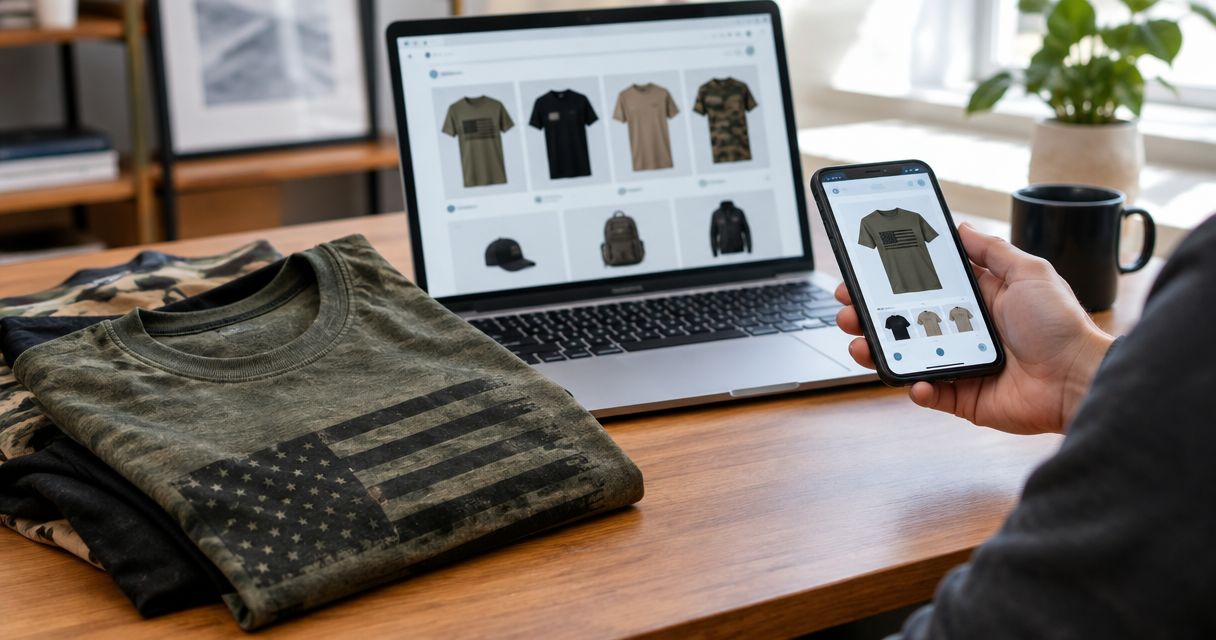
A patriotic shirt can look right in a search result while leaving the important purchase questions unanswered. A graphic tells you what the listing depicts; it does not tell you who will fulfill the order or whether the pictured garment is the one being sold.
Keep 2 decisions separate: whether you trust the transaction and whether the garment meets your needs. An authentic shirt in the wrong size is still the wrong purchase, while clear sizing does not establish authenticity.
That distinction matters when buying for a veteran, a military family member, or yourself. Choose the message you want to wear, then hold the seller to a clear description of the actual item.
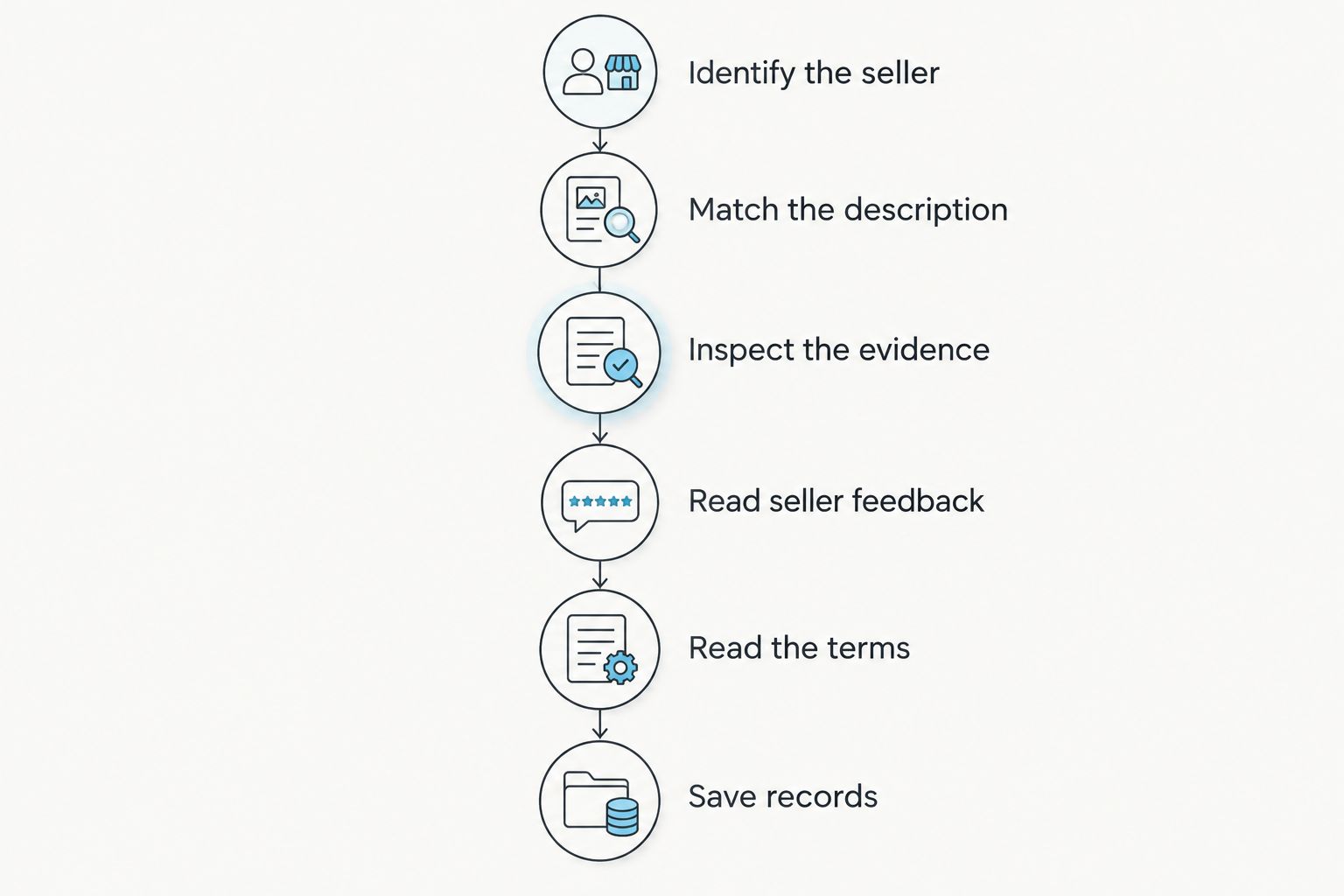
Run these 6 checks before ordering
Use the same checks for a t-shirt, hoodie, hat, or apparel accessory. Finish them before payment rather than trying to reconstruct the offer after a problem.
1. Identify the seller
Find the seller attached to the exact offer you are considering. Do not substitute the product title, a brand-themed page, or a shipping label for the seller's identity.
On Amazon, distinguish the seller information from fulfillment information. On eBay, open the seller information rather than relying only on the listing headline. Who sells the item and who handles delivery are different questions.
If seller authorization matters to your decision, seek confirmation from the brand through its own published contact channels. A seller's claim to be official is a claim to verify, not proof by itself.
2. Match the complete item description
Read the title, description, selected size, color, and condition together. Make sure they describe the same garment. Pay particular attention after changing a variation, because your final selection is what you intend to order.
Look for a clear distinction between a branded garment and an item merely described as patriotic or military-themed. Similar subject matter is not the same as the same product.
If the listing contradicts itself, ask the seller to resolve the contradiction in writing. Do not decide that the most favorable description must be the correct one.
3. Inspect the available evidence
Review the photos for the overall garment, print placement, labels, and any disclosed wear. If the listing concerns a specific secondhand item, request photographs of that actual item when the existing images leave important details unclear.
Use labels as supporting evidence, not as a stand-alone authentication test. Do not invent a universal rule about a particular tag, seam, or print position without a reliable reference for that exact garment.
A polished image is not proof of origin. Equally, an ordinary photograph is not proof that something is counterfeit. Look for consistency across the evidence rather than making a verdict from presentation alone.
4. Read seller feedback for relevant problems
Look beyond the headline rating. Read the substance of feedback for complaints about incorrect items, undisclosed condition, authenticity concerns, and how the seller addressed problems.
Distinguish garment preferences from transaction problems. A reviewer disliking a fit is different from a reviewer reporting that the delivered item did not match the description.
Feedback helps you decide what to investigate; it does not authenticate the garment in your cart. Keep the seller's record and the specific listing under separate review.
5. Read the terms for this purchase
Check the return conditions shown for the exact offer in 2026. Establish how to start a request, what deadlines apply, what condition the item must remain in, and whether any stated exclusions affect you.
Do not assume an independent seller's purchase receives the same service or coverage as a direct order. Likewise, do not assume that a marketplace protection process and a brand guarantee are interchangeable.
If a particular benefit is essential, confirm eligibility before paying. Save the applicable wording rather than relying on an earlier purchase or a general recollection of a policy.
6. Save records and keep communication on-platform
Retain 3 records: the listing, the order confirmation, and any seller messages that clarify the item. Include the selected size, condition description, photographs, and return terms in what you save.
Use the marketplace's own checkout and messaging tools. Decline requests to move payment into a separate transaction, and check current platform guidance if a seller proposes an unfamiliar arrangement.
These records do not guarantee a particular outcome. They give you a clear account of what was offered, what you ordered, and what the seller represented.
Why confidence varies between listings
The platform name stays the same while the evidence attached to an individual offer changes. Base your decision on these factors, not on a blanket statement that every marketplace listing is safe or unsafe:
- Seller identity: A clearly identified seller gives you someone specific to evaluate. An unresolved identity question should stop the purchase.
- Item condition: New and previously worn garments require different questions. For a used item, examine disclosed wear and request measurements when fit is uncertain.
- Evidence quality: Clear, consistent photographs and descriptions help you assess the offer. Contradictions need answers, not optimistic interpretations.
- Terms clarity: You need to understand the process for a wrong, damaged, or misdescribed item before ordering.
- Your requirements: A gift recipient's sizing needs or an event deadline can make an otherwise acceptable listing unsuitable.
These factors explain why two listings for apparently similar shirts can deserve different decisions. They do not establish that either marketplace has a particular counterfeit rate or that an individual seller is authorized.
What should I do if the item looks wrong when it arrives?
Document the mismatch before wearing, washing, or altering the garment. Compare the delivered item with your saved listing, then photograph the specific issue rather than relying on a general statement that it looks wrong.
Start with observable facts: the wrong size, a different graphic, undisclosed damage, or a label that conflicts with the description. Report an authenticity concern as a concern unless you have evidence establishing the item is counterfeit.
Use the order's current help or return process promptly. Read the instructions before sending anything back, and retain the messages and any return documentation. Follow the applicable 2026 terms rather than assuming a deadline from a previous order still applies.
Is buying directly better than using a marketplace?
Buying directly is the clearer choice when your priority is purchasing from the brand itself. It removes the need to determine which independent marketplace seller is behind the offer.
The trade-off is that a direct purchase still requires homework. Check the garment description, size information, shipping terms, and return conditions instead of treating the purchase route as a substitute for reading them.
A marketplace purchase requires that same garment-level assessment plus seller-level checks. Choose it only when the evidence and applicable terms satisfy your needs; convenience alone is not an authenticity test.
How do I check fit on a secondhand listing?
Ask for garment measurements when the listing does not give you enough information to judge fit. A size letter alone does not describe the condition or dimensions of a previously worn shirt.
Compare the seller's measurements with a garment you already wear, using the same measuring method. Ask how the seller measured it so that a flat width is not confused with a full circumference.
Condition and authenticity remain separate questions. A genuine garment can have wear, alterations, or a fit that does not work for you; clear photographs do not resolve every sizing issue.
FAQ
Can I buy Grunt Style from Amazon or eBay safely?
Evaluate the specific seller and listing before buying; the marketplace name alone does not establish authenticity. Check the item description, condition, seller evidence, and purchase terms before payment.
Does an Amazon brand page prove who is selling the shirt?
No, a brand-themed page is not a substitute for checking the seller attached to your selected offer. Read seller and fulfillment information separately.
Does an eBay seller's high feedback score prove a shirt is authentic?
No, a feedback score does not authenticate an individual shirt. Read relevant feedback and assess the listing's photographs, description, and seller answers together.
Can I use a brand guarantee after buying from an independent seller?
Do not assume a brand guarantee covers an independent-seller purchase. Confirm the current eligibility requirements for that purchase route before relying on coverage.
Are photos of the neck label enough to authenticate a shirt?
No, a neck-label photograph alone is not enough to establish authenticity. Assess the complete garment and seek a reliable reference for the exact item if details conflict.
What should I save before placing a marketplace order?
Save the listing, order confirmation, and relevant seller messages. Keep the selected variation, condition description, photographs, and applicable terms with those records.
Should I pay a seller outside the marketplace?
Keep payment within the marketplace's own checkout process. Decline requests for a separate payment arrangement and consult current platform guidance if the proposed process is unclear.
One last thing
Authentic does not automatically mean suitable. A genuine garment can still arrive in a disclosed condition you dislike, fit differently than expected, or fall under purchase terms that do not meet your needs.
For your next purchase in 2026, make the final check about the whole transaction: the seller, the exact garment, and the terms. If an essential question remains unanswered, wait for a clear answer or choose a different purchase route. Do not let a familiar logo make the decision for you.