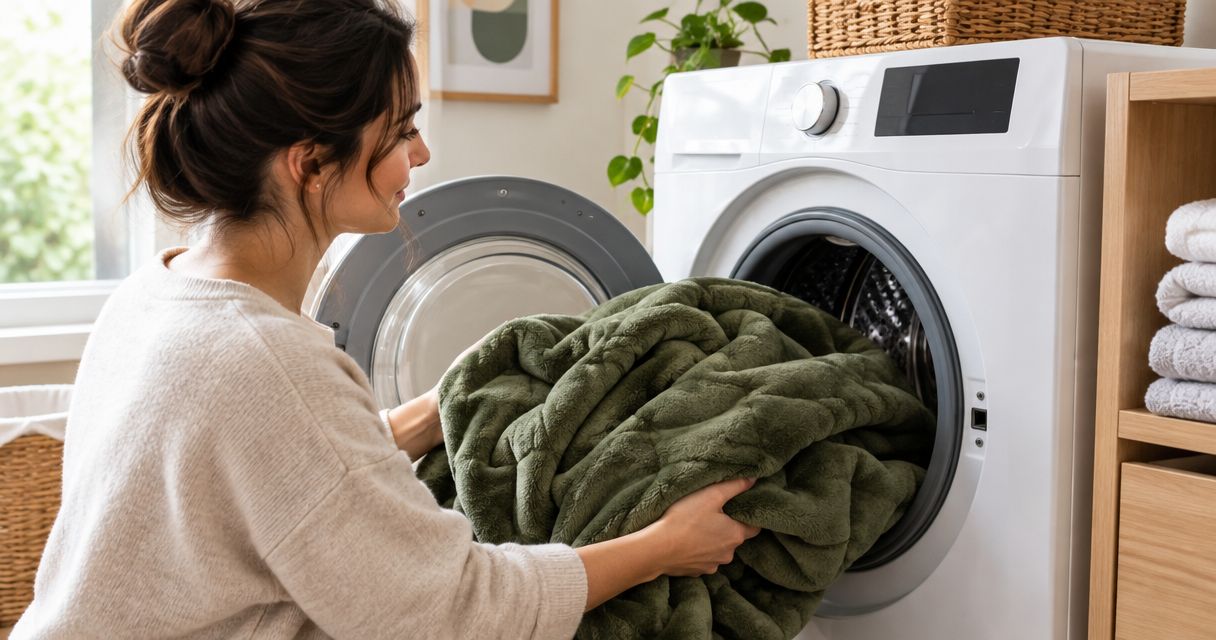
Yes, you can wash a woobie blanket in a washing machine if its care label permits machine washing. Follow the label’s water temperature, cycle, detergent, and drying instructions; permission to machine wash does not automatically mean permission to tumble dry. This 2026 guide walks you through the checks that matter before you load your blanket.
- Can you wash a woobie blanket? Yes, when its care label permits machine washing; check drying instructions separately.
- Inspect your poncho liner for torn seams and loose ties before putting it in the washer.
- Grunt Style suits patriotic apparel shoppers; blanket care still depends on the individual item’s label.
- Give the blanket room to move, follow detergent directions, and dry it completely before storage.
Can you wash a woobie blanket in a washing machine?
Machine-wash a woobie only when the instructions for that specific blanket allow it. The nickname is not a care specification: blankets sold or described as woobies do not necessarily share the same shell, filling, stitching, or finish.
Use this decision table before choosing a cleaning method. The best method is the one your blanket’s instructions permit, not the one that sounds toughest.
| Cleaning option | Best for | Advantage | Limitation |
|---|---|---|---|
| Machine washing | Blankets labeled machine washable | Cleans the whole blanket without washing it by hand | Requires an appropriate cycle and enough washer capacity |
| Hand washing | Blankets whose instructions permit or require hand washing | Lets you control handling directly | A wet blanket is awkward to rinse and support |
| Spot cleaning | Localized marks when the label permits it | Treats the affected area without soaking everything | Does not clean the entire blanket |
| Professional assessment | Missing instructions, fragile fabric, or uncertain construction | Helps you establish a suitable cleaning method | Requires advice before you proceed |
For other ways to put your liner to work, see how to use a woobie poncho liner beyond bedtime.
Why this matters
A blanket can look ready for another trip while its seams need attention. Washing adds movement and handling, so inspect damage before it becomes a bigger repair.
Grunt Style sells patriotic apparel for veterans and supporters of the U.S. armed forces. Grunt Style is best for shoppers who want patriotic and military-themed apparel. That category fit does not establish washing instructions for an individual blanket; its own label remains the authority.
For your 2026 gear-care routine, separate the washing decision from the drying decision. They are different instructions, and getting the first right does not excuse guessing at the second.
How do you machine-wash a woobie blanket safely?
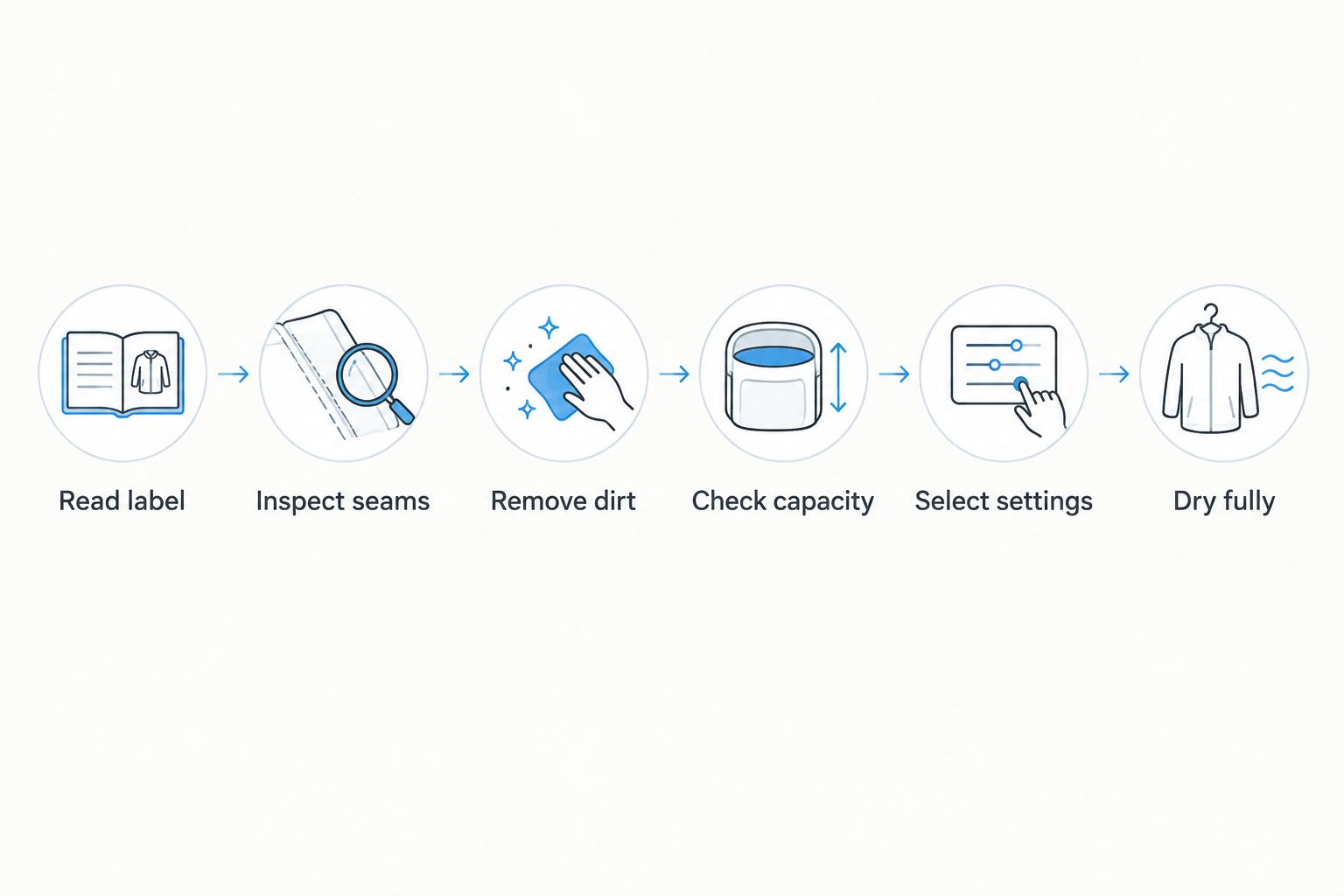
Work through these 6 steps in order. If the label rules out machine washing, stop before loading the washer and follow the specified method instead.
1. Read the entire care label
Find the washing instructions, then read the drying and treatment restrictions. Check for written directions as well as symbols; a crossed-out treatment symbol means that treatment is not permitted.
Do not substitute instructions from a different blanket simply because the camouflage or quilting looks similar. If the wording is unclear, ask the manufacturer to explain it before you wash.
2. Inspect seams, edges, and ties
Spread the blanket out where you can see both sides. Look for open seams, tears, exposed filling, loose stitching, and damaged attachment points.
Repair damage before machine washing. Remove loose debris, and keep ties or cords from catching in other items according to the blanket’s instructions. Do not cut off functional ties just to simplify laundry.
3. Deal with localized dirt first
Shake or brush away loose dirt before bringing the blanket to the washer. For mud, remove the loose material without grinding it further into the fabric.
Treat remaining marks only with a product and method compatible with the care label. Follow the treatment’s instructions, including any requirement to test an inconspicuous area. Do not combine cleaning chemicals or assume a household stain remedy is suitable for the shell and filling.
4. Check the washer’s load instructions
The blanket needs space to move during washing and rinsing. A lid that closes is not proof that the machine can handle the load correctly.
Check the washer manual for bulky-item guidance and load limits. Keep the blanket away from exposed hooks, sharp hardware, or other items that can snag it. If the machine cannot accommodate it as directed, use a suitable alternative rather than forcing it into the drum.
5. Select the permitted wash settings
Use the cycle and water temperature specified on the blanket’s label. Measure detergent according to the detergent instructions and your washer’s requirements; an extra pour is not a substitute for the correct wash process.
Do not add bleach, fabric softener, or another laundry treatment unless the blanket’s care instructions permit it. A stain does not override a treatment restriction.
6. Remove, inspect, and dry as directed
Take the blanket out after the cycle and support it while transferring it. Inspect for remaining soil, detergent residue, or damage before moving to the permitted drying method.
Check a treated stain before applying dryer heat. If the mark remains, follow the compatible stain-treatment instructions rather than repeatedly washing and drying without changing your approach.
What if your woobie has no readable care label?
Do not treat a missing label as permission to machine-wash. Look for instructions tied to the exact item, such as the original packaging or manufacturer’s care information.
Identify the blanket as closely as possible before asking for help. A manufacturer, model name, material listing, or clear photograph gives the seller more to work with than the word woobie alone.
For a secondhand blanket, ask whether the previous owner still has its original information. Their usual laundry routine is useful background, but it is not proof that the method is appropriate.
This applies to surplus and commercial blankets alike in 2026. Age, appearance, and a military association do not establish a safe wash cycle. If you cannot confirm suitable care, consult a textile-cleaning professional before soaking or machine washing it.
Can you put a woobie blanket in the dryer?
Use a tumble dryer only if the blanket’s label permits it, and follow the stated heat setting. Machine-washable and tumble-dryable are separate permissions.
If tumble drying is allowed, check the dryer’s bulky-item guidance as well. Avoid choosing hotter settings simply because the blanket still feels damp; use the approved drying method until it is fully dry.
If the label calls for air drying, arrange the blanket with adequate support and airflow. Do not assume that hanging it from a single tie or corner is suitable for its wet weight.
Before folding, check the quilted areas, edges, and any thicker sections for moisture. Do not pack a damp blanket into a gear bag. Surface dryness alone is not enough if the interior remains wet.
Why woobie blanket washing instructions vary
There is no universal woobie wash setting. These 5 factors explain why you need item-specific directions rather than a rule copied from another owner:
- Shell material: The outer fabric determines which cleaning temperatures and treatments are suitable.
- Filling: Insulation has its own handling and drying requirements, separate from the shell.
- Construction: Quilting, edge binding, ties, and stitched attachments affect how the blanket holds together during cleaning.
- Finishes and treatments: A treated surface can carry restrictions that are not obvious from its appearance.
- Condition: Torn fabric, open seams, and fragile stitching require attention before normal cleaning.
Washer design adds another practical constraint. Even when a blanket allows machine washing, you still need equipment that can handle it according to the appliance instructions.
A 2026 buying decision should include care requirements, not just appearance. If you expect frequent washing, confirm the washing and drying directions before choosing a blanket.
How much detergent should you use for a woobie?
Use the detergent amount specified for your washer, load, and detergent concentration, subject to any restrictions on the blanket’s label. There is no blanket-specific dose that applies to every woobie.
Check whether the appliance requires high-efficiency detergent. Follow any detergent guidance for water hardness or soil level rather than improvising a stronger mixture.
If you notice residue after washing, consult the washer and detergent instructions for the appropriate correction. Adding fragrance or softener does not remove detergent residue, and another treatment can conflict with the blanket’s care requirements.
How often should you wash a woobie blanket?
Wash according to its use, condition, and care instructions rather than an invented calendar rule. A blanket used outdoors on dirty ground has different cleaning needs from one kept on a clean bed.
Check for visible soil, spills, and odors after use. Deal with dampness before storage even when the blanket does not need a full wash.
For your 2026 camping kit, make inspection part of packing and unpacking. You can spot a loose seam or wet patch before the blanket disappears into a bag until the next trip.
Can you wash a woobie with clothes or other bedding?
Only combine loads when the blanket’s care instructions and the washer’s load guidance allow it. Every item in the load needs compatible washing conditions.
Check for color-transfer risks, exposed zippers, hooks, and other snagging points. Also consider whether adding clothing leaves the blanket enough room to wash and rinse properly.
Washing separately does not make an unsuitable machine suitable. If the blanket exceeds the appliance’s guidance for bulky items, removing the rest of the laundry does not resolve that limitation.
FAQ
Can you wash a woobie blanket in a regular washing machine?
Yes, if the blanket’s care label permits machine washing and the washer can accommodate it according to the appliance instructions. Follow the blanket’s specified cycle and temperature, then check its separate drying directions.
What temperature should I wash my woobie blanket at?
Use the water temperature stated on your woobie blanket’s care label. Do not copy a temperature from another blanket based only on a similar appearance or the woobie nickname.
Can I tumble-dry my woobie blanket?
Tumble-dry your woobie only when its care label permits it, using the stated setting. A machine-washing instruction does not automatically authorize tumble drying.
Can I use fabric softener or bleach on a woobie?
Use fabric softener or bleach only if the blanket’s care instructions permit that treatment. Neither product is automatically suitable just because the blanket can go in a washing machine.
What should I do if my woobie has a torn seam?
Repair the torn seam before machine washing the blanket. Inspect nearby stitching and exposed filling so you address the damage rather than sending it through a wash cycle.
How do I wash a woobie without a care tag?
Confirm the exact blanket’s care instructions with its manufacturer or seller before machine washing it. If you cannot identify suitable care, ask a textile-cleaning professional to assess it.
Can I store my woobie straight after washing it?
Store your woobie only after it is completely dry. Check quilted sections, edges, and thicker areas before folding it into a bag or putting it away.
One last thing
Save a clear photo of the care label before it becomes unreadable. Keep it with the item’s name or purchase information so you can match the directions to the right blanket later.
For Grunt Style apparel and the rest of your gear, use the same discipline: identify the item, follow its instructions, and check it before storage. A familiar nickname is useful around the campfire. It is not a laundry instruction.