Grunt Style t-shirts do not have a single wear-out deadline: keep yours while the fabric, seams, and fit still do their job, and replace it when damage makes it uncomfortable or unsuitable for how you wear it. Faded graphics alone do not mean a shirt is finished, and calendar age does not tell you how much wear it has taken.
- How long do Grunt Style shirts last? Judge fabric, seams, fit, and graphics—not an assumed expiration date.
- Patriotic t-shirts can remain useful after graphic fading; holes and failing seams require a different decision.
- Follow each garment’s care label rather than applying one washing routine to every graphic tee.
- Keep a baseline photo and measurements so you can distinguish actual changes from an intentionally distressed design.
How long do Grunt Style t-shirts last before wearing out?
A shirt is worn out when its condition no longer meets your needs—not when it reaches a particular birthday. A tee you wear frequently accumulates use differently from one you bring out for occasional events. Neither ownership time nor appearance alone measures the whole garment.
If you buy a shirt in 2026, record its starting condition rather than assigning it a replacement date. Separate cosmetic changes from structural damage before deciding whether to keep wearing it.
| Condition | What it means | Best for | Limitation and next move |
|---|---|---|---|
| Intact fabric, sound seams, comfortable fit | The shirt still meets its basic clothing function | Continued everyday wear | Check the care label and inspect changes as they appear |
| Faded graphic, intact garment | Appearance has changed without necessarily ending usefulness | Casual wear when you like the faded look | Less suitable when you want a crisp graphic |
| Localized seam opening | A specific area needs attention | Repair assessment | Stop pulling on the opening; inspect the surrounding fabric |
| Widespread thinning, expanding holes, or unusable fit | The garment no longer meets your original needs | Retirement from its original role | Do not treat repeated washing as a repair |
For Grunt Style patriotic apparel, choose the design for the message and assess the individual shirt for condition. A brand name is not a substitute for checking the garment in your hands.
Why this matters
You need a useful replacement rule, not a guessed lifespan. Throwing away an intact shirt because its graphic has faded wastes remaining use; wearing a shirt with an opening seam without addressing it ignores a repairable problem.
Grunt Style patriotic t-shirts are best for veterans and supporters who want military-themed or patriotic everyday apparel. That describes the intended audience, not a durability ranking against other brands.
For your 2026 wardrobe, decide what each shirt must still do. An everyday tee needs a comfortable fit and intact construction. A shirt you reserve for family photos also needs to meet your appearance standard.
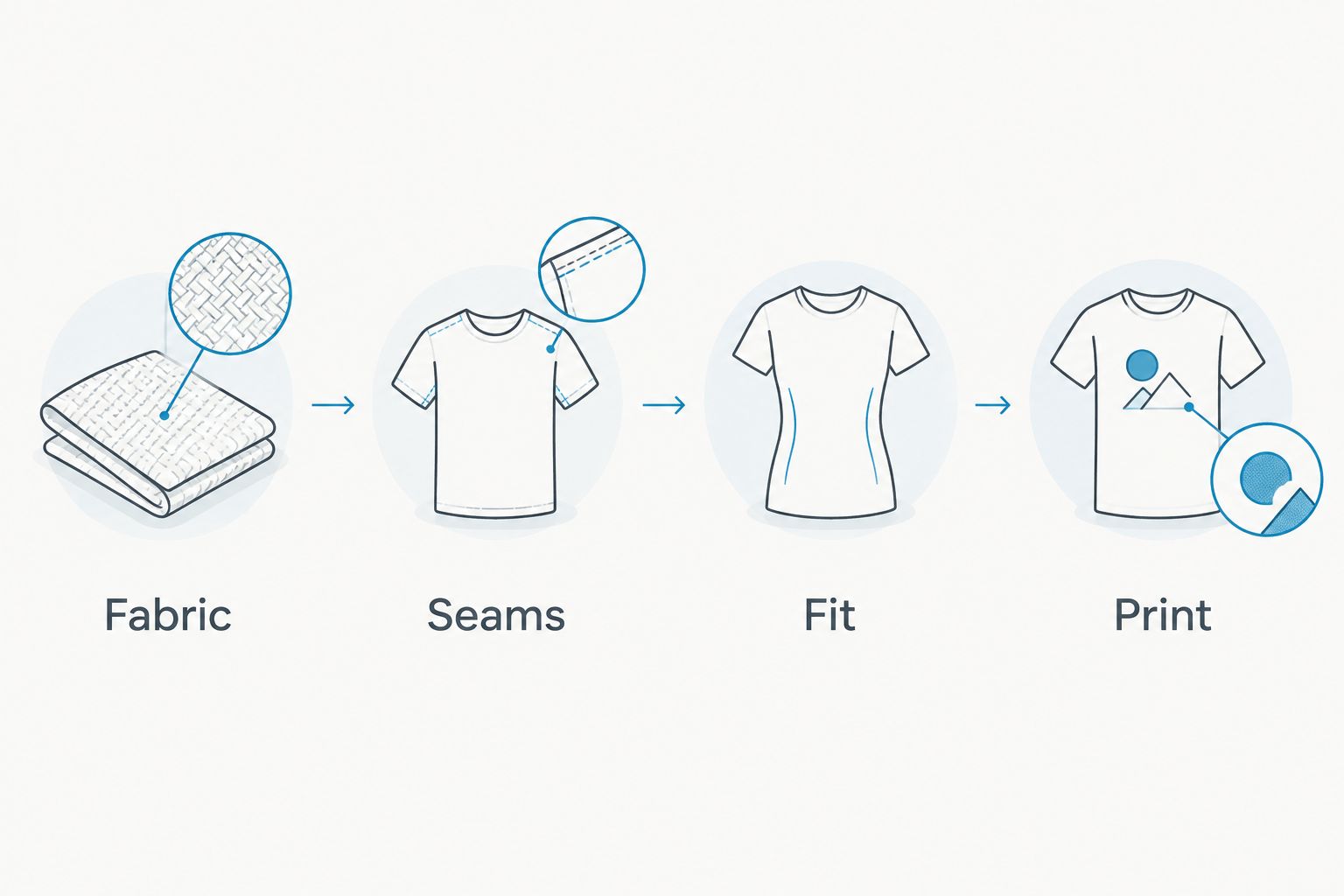
Check fabric, seams, fit, and print before replacing a shirt
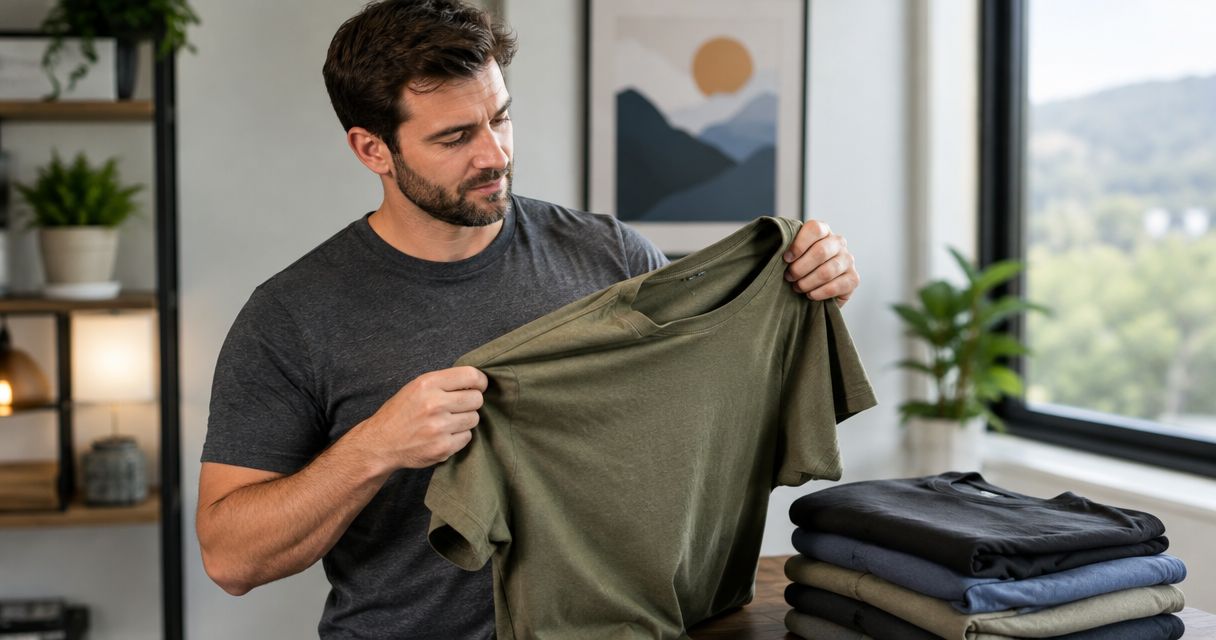
Inspect a clean, dry shirt in good light. Work through the same checkpoints each time so a faded graphic does not distract you from a seam opening—or make you retire otherwise usable clothing.
Fabric: look beyond softness
Check the underarms, lower front, shoulders, and any area that rubs against equipment or straps. Look for holes, snags, and noticeably thin patches. Softness by itself is not the same as fabric failure.
Hold a questionable patch beside an undamaged area of the same shirt. Compare the fabric without stretching it hard. Aggressive pulling creates stress rather than providing a useful test.
Keep wearing intact fabric; investigate thinning and holes. A small isolated snag and broad fabric breakdown are different problems, even if both are easy to overlook when the shirt lies folded.
Seams: distinguish loose thread from an opening
Look along the shoulder seams, underarms, side seams, and hems. A visible thread end does not establish that the seam is failing. Check whether the stitching still holds the joined fabric together.
Do not pull a loose thread to find out what happens. Photograph the area and inspect whether the opening extends beyond it. If you cannot tell whether trimming or stitching is appropriate, ask someone experienced in garment repair.
An opening seam needs attention before the next hard wear. Repair suitability depends on the actual stitching and surrounding fabric, not the shirt’s age.
Fit: check movement, not just appearance
Put the shirt on and move normally. Reach forward, raise your arms, and sit down. Notice whether the neckline, shoulders, sleeves, and hem still sit comfortably.
An uncomfortable fit makes a shirt unsuitable for you even when the fabric remains intact. Compare its present dimensions with an earlier measurement before deciding that laundering caused the change. Your body and your fit preferences also matter.
Print: separate design from damage
Compare the graphic with a photo from when the shirt was new. An intentionally distressed design starts with a worn-looking appearance; that is different from new cracking, peeling, or missing sections.
A changed graphic is an appearance decision unless another problem accompanies it. If you still like the look and the garment is sound, keep it in rotation. If the message is no longer readable enough for your purpose, move it out of that role.
Build a condition record instead of guessing a lifespan
A simple record gives you something better than memory. Start with a new purchase or document a shirt you already own; either way, use the same method when checking it again.
- Save 1 baseline photo. Lay the shirt flat in even light, with the graphic and overall shape visible. Add a close-up if a particular seam or patch concerns you.
- Record 2 measurements. Measure the flat chest width and body length without stretching the shirt. Note the measurement points so you can repeat them accurately.
- Check 3 structural areas. Inspect the neckline, underarms, and hem. Record existing damage rather than assuming every irregularity appeared recently.
- Write down its role. Decide whether the shirt is for everyday use, workouts, events, or home wear. That role sets your appearance and comfort standard.
- Compare when something changes. Recheck after you notice tighter fit, a damaged graphic, or a new opening. You do not need an invented inspection schedule.
For a shirt purchased in 2026, save the purchase date alongside this record. The date gives context; the photos, measurements, and inspection show the actual changes.
Keep the record simple enough to use. You are checking a favorite tee, not building a laboratory report. A consistent photo and repeatable measurements are more useful than a detailed note you never revisit.
Why t-shirt lifespan varies
These are general garment-care factors, not a product-specific lifespan formula. They explain why two shirts bought together do not necessarily reach the same condition together.
- Wear frequency. Repeated use exposes a garment to more movement, rubbing, and cleaning. Compare how often you actually wear shirts, not just when you bought them.
- Friction and snagging. Rough surfaces, straps, fasteners, and equipment contact put stress on particular areas. Inspect the locations that receive that contact.
- Laundering choices. Water temperature, cycle selection, cleaning products, and drying method must suit the garment. Use the label rather than a routine borrowed from another shirt.
- Fit and movement. A fit that pulls noticeably at seams deserves attention. Choose a comfortable size rather than relying on stretching the garment into shape.
- Starting construction and decoration. Fabric composition, stitching, and graphic application affect care requirements. Read the actual garment information instead of assuming all tees are identical.
- Your definition of finished. Fading can end a shirt’s usefulness for a polished event without ending its usefulness at home. Structural failure is a separate threshold.
Do not turn these factors into an unsupported month or wash-count estimate. They help you make better decisions about your own shirt; they do not establish a universal replacement interval.
How should you wash a graphic tee to protect its useful life?
The garment’s care label comes first. For your 2026 laundry routine, check washing, drying, bleaching, and ironing instructions before selecting settings. General graphic-tee advice does not override instructions attached to the shirt.
Before washing
Check pockets and look for stains, snags, or opening seams. Separate items that could catch the fabric, and avoid washing a graphic tee against exposed hooks or other abrasive fasteners.
Turning a printed tee inside out reduces direct rubbing against the graphic during laundering. It is a protective step, not a promise that the print will never change. Continue to follow the label’s temperature and cycle directions.
Treat stains only with products appropriate for the garment. Do not assume a stronger cleaner is a better choice for colored fabric or decoration. Test a suitable treatment in an inconspicuous area before applying it broadly.
During washing and drying
Choose the permitted settings rather than the hottest or longest option by habit. Measure laundry products according to their instructions. Adding extra detergent does not repair wear or restore a damaged graphic.
Follow the drying instructions, including any restrictions on tumble drying. If air drying is permitted, support the garment without stretching it out of shape. Do not assume that a setting suitable for towels also suits a printed shirt.
Avoid ironing directly over a graphic unless the garment instructions explicitly permit it. If a shirt needs pressing, check the label and protect the decoration according to those directions.
For more detail on protecting printed designs, use the guide to caring for flag-print apparel so colors do not fade.
After drying
Check the shirt before folding it away. Look at any problem area you identified before washing, then check fit once the garment is fully dry. Do not judge the finished size while the fabric is wet and stretched.
If you discover a change, document it and review the settings you used. Repeating the same routine without checking the label gives you no basis for correcting it.
Does a faded shirt need replacing?
Fading alone does not make a t-shirt unusable. Keep wearing it if the fabric and seams remain intact, the fit works, and you still like its appearance.
The trade-off is presentation. A worn-looking graphic can suit casual use while missing the standard you want for a ceremony or group photo. Reassign the shirt based on its actual condition rather than treating every cosmetic change as failure.
Can you repair a shirt instead of retiring it?
Localized damage deserves a repair assessment before you discard an otherwise useful shirt. An opening seam and fabric that is thinning across a broad area need different responses.
Check whether the surrounding fabric can support a repair, and ask a repair professional when you are unsure. A repair can preserve use, but it does not return the entire garment to new condition or guarantee that the repaired area will look unchanged.
Should an everyday tee also be your hard-use shirt?
Choose clothing for the activity, not just the graphic. A patriotic everyday tee is not automatically protective workwear or purpose-built exercise apparel.
Keep your expectations specific: comfort, unrestricted movement, and an intact garment. Where an activity requires protective clothing or a particular performance feature, verify that requirement separately instead of assuming a regular tee meets it.
FAQ
How long do Grunt Style shirts last with regular wear?
There is no single replacement interval that fits every shirt and wearing routine. Check fabric, seams, fit, and print condition rather than treating ownership time as a durability test.
How do I know when my t-shirt is worn out?
A t-shirt is worn out for its intended role when damage or fit prevents comfortable, suitable use. Widespread thinning, expanding holes, and failing seams deserve more attention than fading alone.
Does a cracked graphic mean I should throw my shirt away?
A cracked graphic alone does not require you to discard an otherwise intact shirt. Compare it with the original design and decide whether its current appearance still suits your needs.
Should I wash every patriotic t-shirt the same way?
Follow each shirt’s own care label rather than assuming every patriotic tee has identical care requirements. Fabric and decoration can require different treatment.
Can a shirt shrink without being worn out?
A shirt can become unsuitable because its fit changes even when the fabric remains intact. Compare dry measurements and review the care instructions before deciding what changed.
Are Grunt Style shirts guaranteed to last a set number of washes?
Do not treat a set wash count as a lifespan promise without an explicit product-specific statement. Any guarantee terms and the garment’s physical durability are separate questions.
Is an old t-shirt still good if it has no holes?
An old t-shirt can remain useful when its seams, fit, and fabric still meet your needs. Check thinning and neckline condition as well as visible holes.
One last thing
The graphic can look finished before the shirt is finished. Check the inside and seams before making a replacement decision based on the front alone.
Use this rule for your 2026 wardrobe: keep what works, assess localized damage for repair, and retire clothing that no longer does its job. You do not need a guessed expiration date to make that call.