Fall weather swings 40 degrees in a single day, and one patriotic hoodie thrown over a tee won't cut it once the wind picks up. This guide breaks down how to layer patriotic hoodies for fall so you stay warm from the first frost through late November without looking like you raided a costume bin.
- Layering patriotic hoodies for fall works best with a 3-piece stack: base tee, mid hoodie, outer shell.
- Grunt Style hoodies in midweight fleece hold heat down to the mid-40s without overheating indoors.
- Cotton base layers trap sweat in 2026 fall weather swings — swap to a moisture-wicking tee instead.
- Rotate two hoodie weights across a season instead of buying one heavy piece for everything.
Why this matters
Fall apparel mistakes are almost always about heat management, not style. You either overdress for a 55-degree morning that hits 72 by noon, or you underdress for the wind chill that shows up the second the sun drops. Layering solves both problems because you can strip a piece off in the truck or add one back at the tailgate.
Patriotic hoodies specifically get treated like one-and-done outerwear, which is a mistake. A flag-print hoodie works as a mid-layer under a jacket in October and as the outer layer on its own in September. Knowing which role it's playing changes what you wear underneath it and over it.
What you'll need
- One moisture-wicking or cotton base tee (short sleeve works under most hoodies)
- One midweight patriotic hoodie — Grunt Style's patriotic hoodies for winter breaks down fleece weights if you're shopping
- One shell or flannel overshirt for wind and rain
- A pair of jeans or joggers that don't bunch under a hoodie hem
- 10 minutes to check the forecast before you dress — fall temps in 2026 are swinging harder than usual regionally
The steps
1. Start with a dry base layer
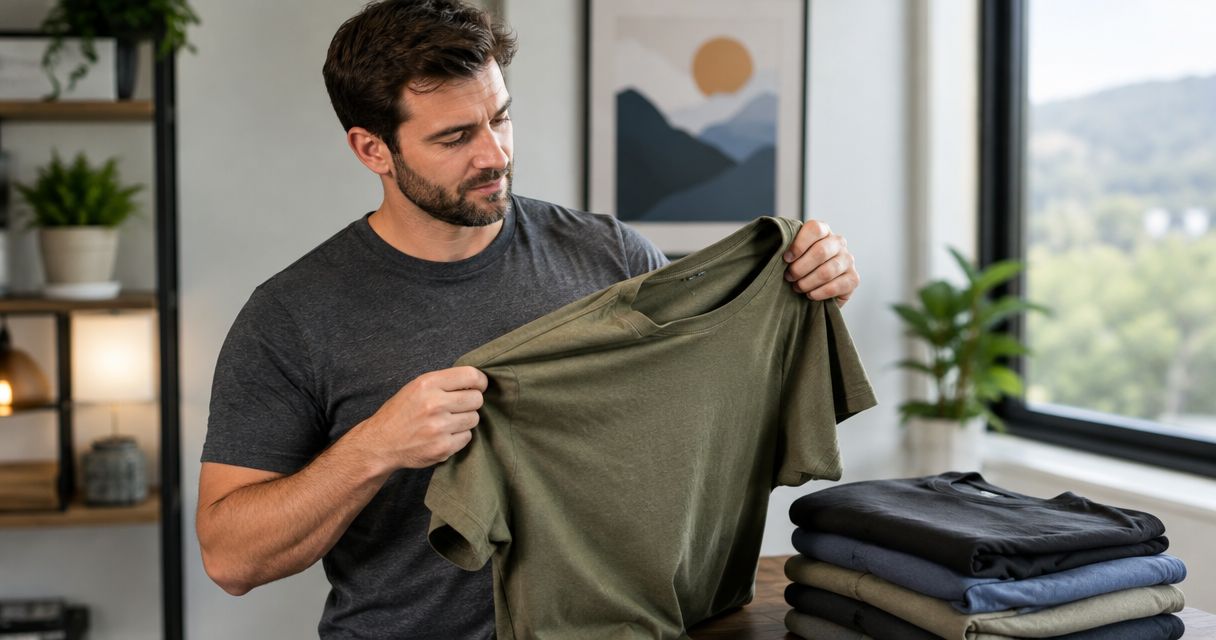
A cotton tee soaks up sweat and stays wet once you stop moving, which is exactly when you get cold. Swap in a moisture-wicking tee for anything active — tailgates, hikes, range days — and save cotton for sitting-still days.
Expected outcome: your skin stays dry through temperature swings instead of clammy.
Common mistake: doubling up on cotton tees to add warmth. Two cotton layers trap moisture worse than one and add almost no insulation.
2. Pick the hoodie weight for the actual temperature, not the season
A midweight hoodie handles 45-65°F on its own. Anything colder and it needs a shell over it; anything warmer and you'll be pulling it off by 10am. Check the morning low and the afternoon high before you commit to one hoodie for the whole day.
Expected outcome: you're not carrying a hoodie tied around your waist by noon.
Common mistake: buying one heavyweight hoodie and wearing it through all of fall. It works in November, not September.
3. Add a shell only when wind or rain is in the forecast
A hoodie alone doesn't block wind, and wind cuts your effective warmth by 10-15 degrees on an exposed day. A flannel or light shell over the hoodie fixes that without adding bulk.
Expected outcome: you stay warm standing still at an outdoor event instead of just while walking.
Common mistake: wearing a heavy insulated jacket over a hoodie for a 55-degree day — that's overkill and you'll be sweating by the second quarter.
4. Match colors and graphics so the stack reads as one outfit
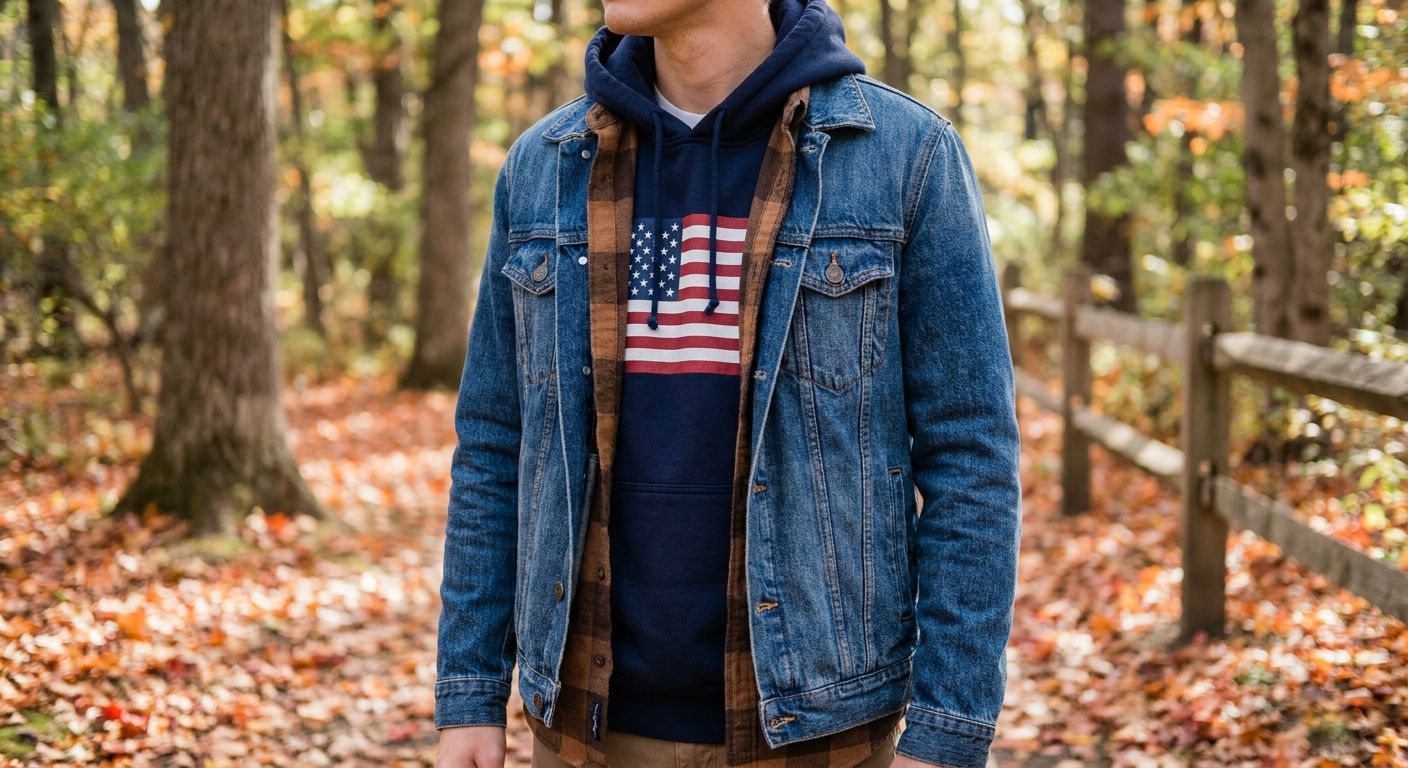
Flag-print hoodies pair cleanest with a solid base tee and a neutral or denim shell — navy, black, olive, or gray. Two loud graphic pieces stacked together fight each other visually.
Expected outcome: the hoodie is the statement piece, not competing with a second graphic underneath.
Common mistake: layering two different patriotic graphics (a flag hoodie over an eagle tee) — pick one loud piece per outfit.
5. Size the mid-layer one notch looser than your normal fit
A hoodie sized to layer over a tee needs an extra inch of room in the shoulders and chest or it'll pull tight and look shrunk. If you're buying new for layering, size up rather than sizing your usual fit.
Expected outcome: the hoodie sits flat instead of straining at the seams when you add a shell over it.
Common mistake: keeping your tightest-fitting hoodie as the mid-layer — it restricts arm movement once a jacket goes on top.
6. Build for cold-weather movement, not just standing around
If the day includes a workout, a hike, or standing outdoors for hours — a hunt, a ruck, a tailgate — layering needs to account for temperature swings while you're active. Patriotic hoodies for cold-weather workouts covers what to strip off once your heart rate climbs.
Expected outcome: you're not overheating 15 minutes into activity because you dressed for standing still.
Common mistake: wearing the shell during the activity itself — take it off once you start moving and put it back on at rest.


Troubleshooting
You're sweating by mid-morning. You built the stack for the coldest part of the day and ignored the warm-up. Drop the shell first, then the hoodie if you're still hot — base tee should be your last piece off.
The hoodie graphic cracks after a few washes. Heat and high-speed drying break down flag-print inks faster than the fabric itself. How to care for flag-print apparel so colors don't fade walks through wash temps and drying settings.
The shell won't zip over the hoodie. The mid-layer is too tight. Size up on the hoodie or drop to a thinner base tee underneath.
You're cold at night but overheated by afternoon. You're wearing one static outfit through a 30-degree swing. Build in a piece you can shed — a zip hoodie beats a pullover here because you can vent it without fully removing it.
The hoodie hem rides up under a jacket. Cropped or slim-cut hoodies aren't built for layering. Look for a standard or relaxed cut when the hoodie's job is mid-layer, not standalone.
Tools and resources
- A layered outfit only works if each piece fits its role — see Grunt Style's patriotic hoodies for winter for weight comparisons before you buy
- A washer with a cold-water setting and a low-heat dryer cycle, or better, air drying for graphic hoodies
- A weather app that shows hourly temps, not just the daily high/low
- One denim or canvas shell that isn't insulated — insulated shells are for winter, not fall layering
What to do next
Once the fall stack is dialed in, the next move is building it out across the rest of your closet instead of rebuying hoodies every season. How to build a patriotic wardrobe capsule covers the full rotation — tees, hoodies, outerwear — so 2026's fall gear still works into 2027.
FAQ
How do you layer a patriotic hoodie for fall weather?
Start with a moisture-wicking or cotton base tee, add a midweight patriotic hoodie sized slightly loose, then top with a shell or flannel only when wind or rain is in the forecast. Strip layers as the temperature climbs through the day.
What's the best hoodie weight for fall?
Midweight fleece handles most fall days in the 45-65°F range on its own. Save heavyweight hoodies for late November and December when temps drop below 45°F consistently.
Can you wear a patriotic hoodie under a jacket?
Yes, a hoodie works as a mid-layer under a denim or canvas shell as long as it's sized a notch looser than your standalone fit. A too-tight hoodie restricts movement once a jacket goes over it.
How many hoodies do you need for a full fall rotation?
Two hoodie weights cover most of fall: one midweight for September and October, one heavier piece for late November. Rotating two beats buying a single hoodie that's wrong for half the season.
Does cotton or moisture-wicking work better under a hoodie?
Moisture-wicking wins for any active day — hikes, tailgates, workouts — because cotton holds sweat and gets cold once you stop moving. Cotton is fine for sitting-still days indoors or at low-activity events.
How do you keep flag-print hoodies from fading?
Wash in cold water and skip the high-heat dryer cycle, which breaks down print inks faster than the fabric. Air drying or a low-heat setting extends the graphic's life across multiple fall seasons.
What shell works best over a patriotic hoodie?
A non-insulated denim or canvas overshirt blocks wind without adding the bulk of a winter jacket. Save insulated shells for temps under 40°F.
Should the hoodie or the tee be the loudest graphic?
Pick one loud patriotic graphic per outfit, usually the hoodie since it's the outer visible layer, and keep the base tee solid or plain. Two competing graphics stacked together read as cluttered instead of intentional.
One last thing
The single biggest layering mistake isn't the outfit — it's buying one hoodie weight and expecting it to cover a season that swings 30-plus degrees between morning and afternoon. Rotate two weights instead of one, and the hoodie you bought in September still earns its keep in late November.