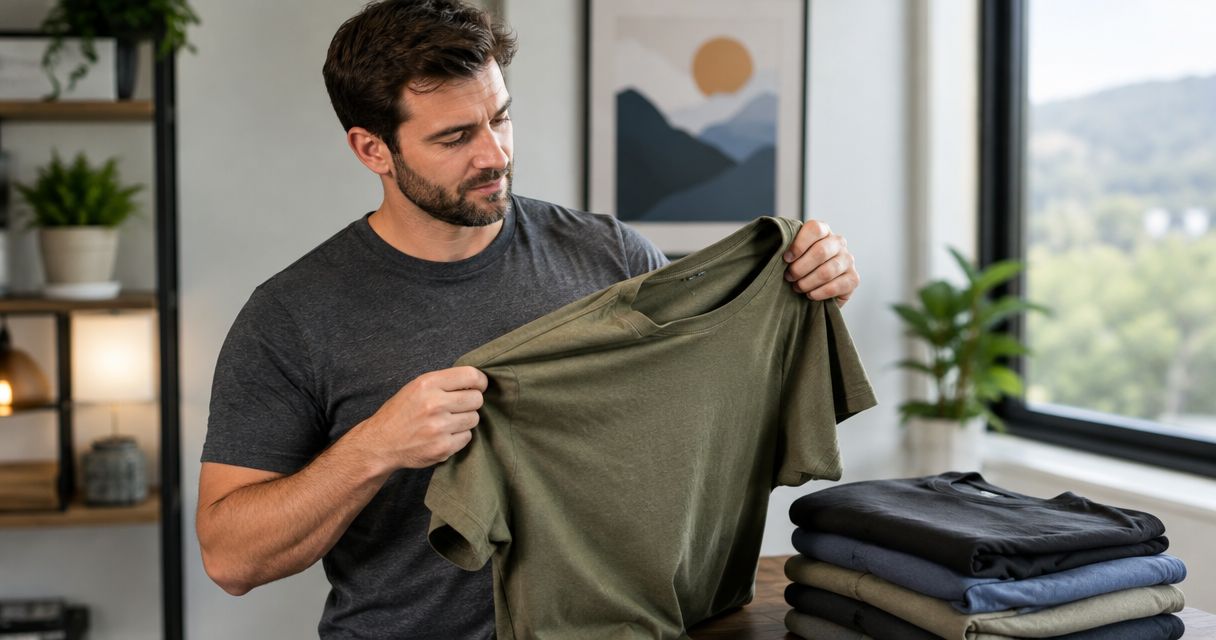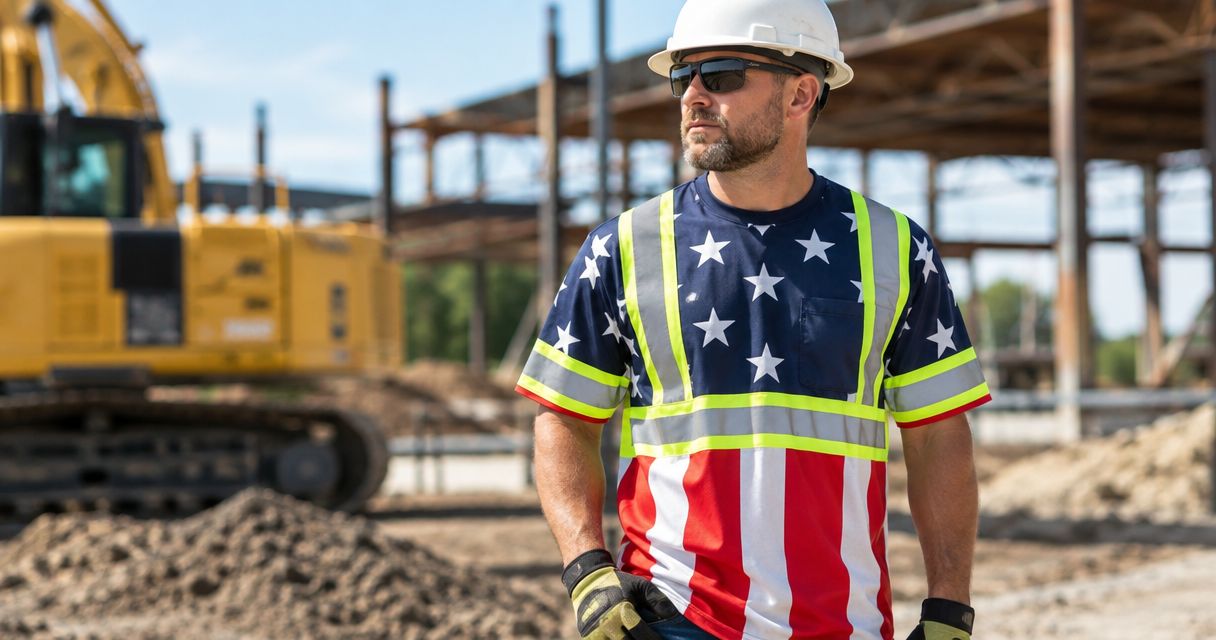
Jobsite crews looking for patriotic safety shirts need color that does the safety job and a graphic that does the pride job — those are two different jobs, not one. Crews pulling long shifts around trucks, forklifts, and moving equipment need a shirt that reads at a distance in daylight and holds up through sweat, dust, and weather, not a shirt that just looks tough standing still. Grunt Style's patriotic work shirts for jobsite crews line exists for exactly this gap: safety-color base layers with the flag-forward look the brand is built on, worn as daily gear rather than a one-day compliance prop.
This guide breaks down what actually improves visibility on an active site, where a plain safety-color tee stops being enough, and how to order for a whole crew instead of one guy at a time in 2026.
- Grunt Style's Safety Green Long Sleeve is a patriotic safety shirt built for daylight visibility, not a certified hi-vis vest.
- ANSI/ISEA 107 Class 2 or Class 3 vests still go on top when a site requires certified PPE.
- The Safety Green 3-Pack outfits a crew fast instead of ordering shirts one at a time.
- Dark camo and navy flag prints are great off-site gear and poor visibility gear near equipment.
Why patriotic safety shirts matter for jobsite crews
OSHA's general duty clause pushes employers to reduce struck-by hazards around moving equipment, and ANSI/ISEA 107 is the standard hi-vis apparel gets measured against on regulated sites. Crews often supply their own daily wear underneath or alongside required PPE, and that daily wear should not fight the certified vest for attention or replace it outright.
Tradesmen who want a patriotic identity at work still have to answer to a foreman's PPE policy first. Grunt Style's patriotic apparel for tradesmen line works because the safety-color options sit inside that policy instead of around it — the graphic is loud, the color underneath is functional.
Build the visibility layer right
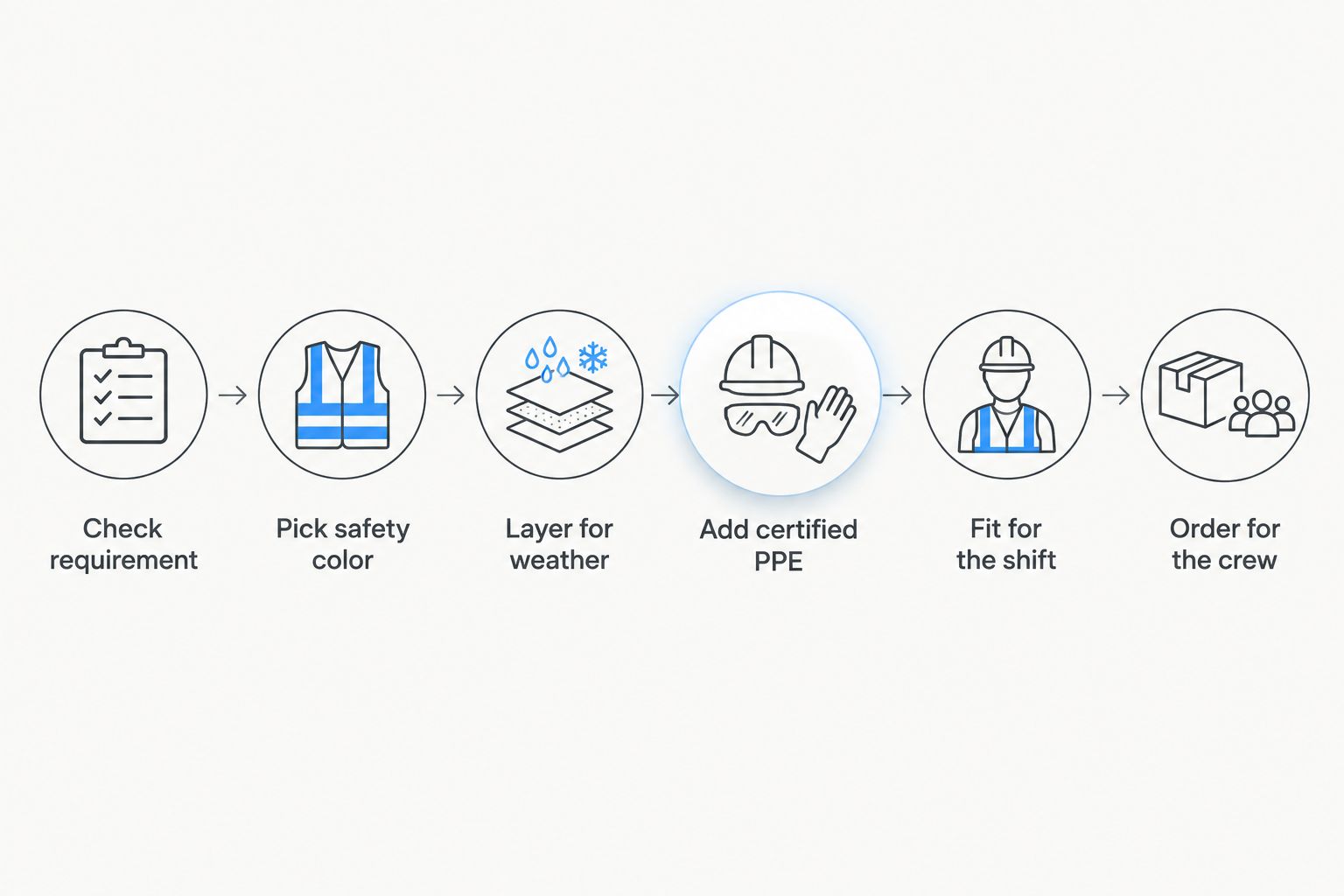
Check your site's visibility requirement before you order anything
Don't guess at what a general contractor expects. Confirm it in writing or on posted signage before a crew shows up in the wrong color.
- Ask the site super or foreman what PPE class applies to your trade
- Read posted site signage for vest and base-layer color rules
- Confirm whether the requirement covers shirts underneath a vest, not just the vest itself
- Check if the GC's internal policy is stricter than the OSHA baseline
Pick a safety color that reads at distance in daylight
Safety green and safety yellow read better than orange against most green or brown job environments. Color choice matters more than most crews think until someone gets missed at 40 yards.
- Standardize the crew on one safety color so an outlier is spotted instantly
- Keep the patriotic graphic on the chest or back panel so the base color stays unbroken
- Avoid camo or dark navy as an outer layer anywhere near moving equipment
- Match long sleeve to short sleeve within the same safety color for seasonal swaps
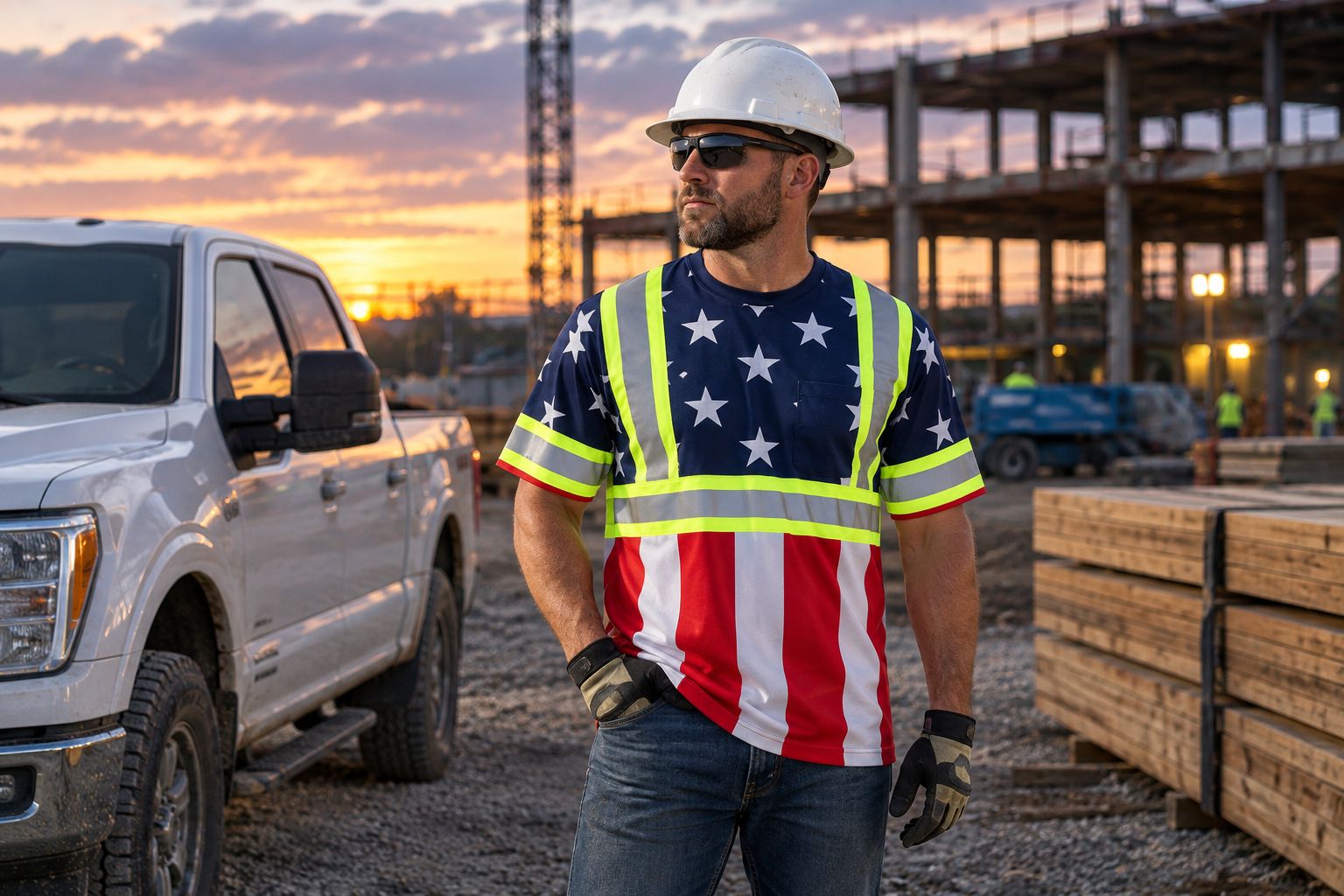
Layer for weather without losing visibility
Cold mornings and hot afternoons both push crews toward layering mistakes that quietly kill visibility.
- Keep the safety-color piece as the outermost layer during cold months
- Add a work jacket over the safety layer, never a dark hoodie on top of it
- Drop to a lighter long sleeve once temps climb instead of stripping to a non-safety color
- Check sleeve length matches the trade — full coverage for welding and cutting, breathable long sleeve for general labor
Add certified PPE on top when the job requires it
A safety-green cotton shirt is a strong base layer. It is not a substitute for certified hi-vis gear on a regulated site.
- Layer an ANSI/ISEA 107 Class 2 or Class 3 vest over the shirt when the site mandates certification
- Check retroreflective striping is unbroken and visible from front, back, and both sides
- Replace any vest once the reflective tape dulls, cracks, or peels
- Keep the certified vest as the compliance layer, not the shirt underneath it
“A safety-green tee doesn't make you compliant on a site that requires certified hi-vis — it makes you easier to spot the second you put the vest on over it.”
This is where the shirt earns its place on the crew truck instead of the closet. A five-person crew standardized on one safety color and one certified vest style is easier to manage than five guys improvising their own look every morning.


Fit the shirt for a full shift, not a photo
A tight shirt bunches under a vest and a baggy shirt snags on equipment. Fit is a safety decision, not just a comfort one.
- Order true-to-size or one size up if it's going under a jacket or vest
- Pick long sleeve over short sleeve for trades with exposed-arm risk from sun, scrape, or spark
- Prioritize breathable fabric for outdoor labor through summer heat
- Skip loose cuffs on anyone working near moving machinery
Order at crew scale, not one shirt at a time
One guy in the wrong color is a liability. A whole crew in the same safety color and the same graphic is a standard.
- Standardize the crew on one safety-color shirt so a rogue color stands out immediately
- Buy multi-packs to cut per-order overhead for whoever's handling gear
- Keep two or three spares on-site for last-minute replacements
- Retire faded shirts before the safety color drifts toward a duller shade
Comparing your options
| Option | Best for | Key limitation |
|---|---|---|
| Safety Green Long Sleeve (single) | Daily wear on outdoor sites, one worker at a time | Not ANSI/ISEA 107 certified, no reflective tape |
| Safety Green Long Sleeve 3-Pack | Crews outfitting multiple guys or rotating shifts | Same non-certified limitation, just at volume |
| Certified ANSI Class 2 or 3 vest worn over the shirt | Sites requiring documented hi-vis compliance | No patriotic branding, purely functional gear |
| Standard patriotic tee in a non-safety color | Off-site, breakroom, weekend wear | No visibility benefit near equipment or traffic |
Verdict: the Safety Green Long Sleeve is the right daily base layer for jobsite crews in 2026, but it stops being compliance gear the moment a site requires certified hi-vis. Layer accordingly.
Common mistakes jobsite crews make
- Assuming any bright shirt satisfies a Class 2 or Class 3 requirement — safety color and certified hi-vis are not the same category of gear
- Wearing a dark hoodie or camo jacket over a safety-color shirt — the outer layer is what other people actually see
- Ordering for one guy instead of the whole crew — mismatched colors on a site make it harder for a foreman to spot who's where
- Skipping reflective PPE on dawn or dusk shifts — a safety-color shirt loses most of its advantage once natural light drops
- Letting faded shirts stay in rotation — a washed-out safety green reads closer to olive from 50 feet away
FAQ
Are patriotic safety shirts the same as certified hi-vis apparel?
No. A safety-color shirt like Grunt Style's Safety Green Long Sleeve improves daylight visibility but is not certified to the ANSI/ISEA 107 standard. Sites that require certified hi-vis still need a Class 2 or Class 3 vest worn on top.
What color reads best on a jobsite?
Safety green and safety yellow generally read better than orange against green or brown job environments in daylight. The right choice also depends on the site's existing PPE color scheme.
Can a crew wear patriotic graphics on safety-color gear?
Yes, as long as the safety color stays the dominant base and the graphic doesn't cover the panels used for visibility. Keeping the design on the chest or back works without compromising the color underneath.
Do safety-color shirts replace a hi-vis vest?
No. A safety-color shirt is a strong base layer, but a certified vest with retroreflective striping is still required wherever the site mandates ANSI/ISEA 107 compliance.
How should a crew order safety shirts to save time?
Order in multi-packs like the Safety Green Long Sleeve 3-Pack so the whole crew ends up in the same color instead of coordinating individual orders one at a time.
Is long sleeve or short sleeve better for jobsite visibility?
Long sleeve gives more coverage for trades with exposed-arm risk from sun, sparks, or scraping, while keeping the same safety-color visibility benefit as short sleeve.
Do faded safety shirts still count as visible?
A washed-out safety green loses contrast and can read closer to olive from a distance. Retire faded shirts before they stop doing their job.
One last thing
Most crews get the color right and the layering wrong — a dark jacket thrown over a safety-green shirt on a cold morning cancels out the entire point of wearing it. If the temperature drops, the safety color needs to stay the outer layer, and the jacket needs to go over it, not the other way around. That single habit fixes more visibility gaps in 2026 than switching brands or colors ever will.