Best overall patriotic aviator jacket: the A-2 leather flight jacket, the original military silhouette that still works for everyday wear in 2026. Best for extreme cold: the B-3 shearling bomber, built for unheated cockpits at altitude. Best budget layering pick: the MA-1 nylon flight jacket, the lightest style on this list and the easiest to build a patriotic outfit around. This guide ranks the five aviator jacket styles that actually show up at air shows, veteran reunions, and Air Force birthday parties this year.
- The A-2 leather flight jacket wins best overall patriotic aviator jacket for everyday wear in 2026.
- The B-3 shearling bomber is the pick for sub-freezing outdoor Veterans Day events.
- The MA-1 nylon flight jacket layers over a hoodie without adding bulk and costs less to maintain.
- Patch-covered squadron jackets suit collectors who want a personalized aviation look.
- Every style on this list traces back to a real U.S. military design, not a fashion knockoff.
Why this matters
The aviator jacket has carried military weight since before WWII, and civilians, veterans, and active pilots all wear versions of it for different reasons. The U.S. Air Force marks its birthday on September 18, and patriotic aviator jackets show up on more shoulders around that date and Veterans Day than at almost any other point in the calendar.
Pick the wrong style and you either overheat in nylon standing on a cold flight line, or you're stuck in a fashion bomber with no real insulation when the temperature drops. Grunt Style built its name on patriotic apparel that holds up outdoors, and that same standard applies to picking an aviator jacket: the design should match the weather and the event, not just the look.
What makes the best patriotic aviator jacket
- Shell material — leather, nylon, or cotton blend drives weight and how much weather it handles
- Collar style — shearling, knit, or quilted changes how well wind gets blocked at the neck
- Historical accuracy — true to A-2, G-1, B-3, or MA-1 military specs versus a fashion copy
- Layering room — enough cut to fit a hoodie or long sleeve underneath without binding at the shoulders
- Patch compatibility — chest and sleeve space for a squadron patch or an American flag patch
- Season range — three-season nylon versus true deep-winter shearling
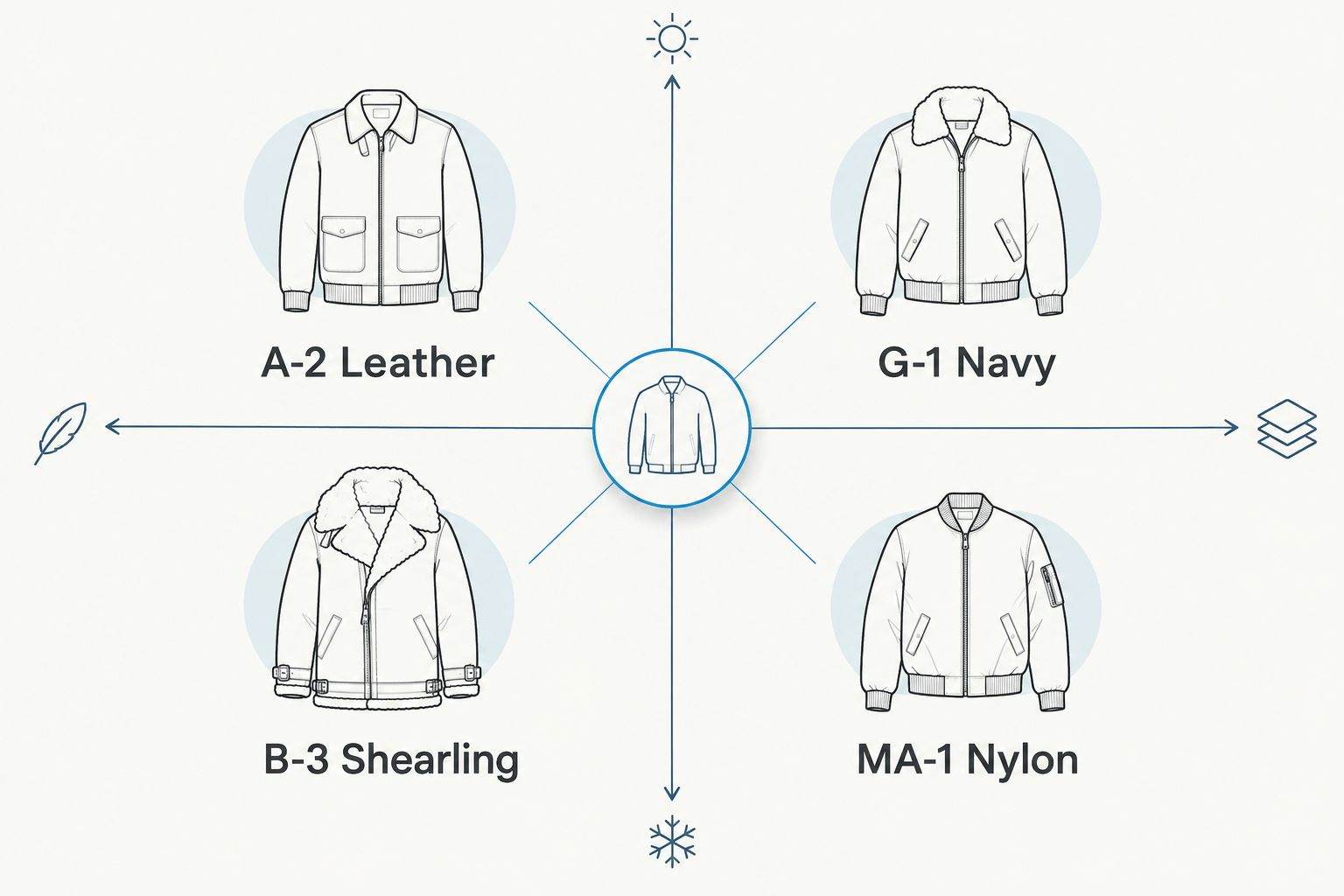
Patriotic aviator jackets at a glance
| Style | Best for | Standout feature | Key limitation |
|---|---|---|---|
| A-2 Leather Flight Jacket | Everyday patriotic style | Horsehide or cowhide shell that breaks in and molds to the wearer | Needs conditioning and isn't machine washable |
| G-1 Navy Flight Jacket | Season-to-season versatility | Shearling collar that adds warmth right where wind hits hardest | Mouton collar needs occasional brushing to hold shape |
| B-3 Shearling Bomber | Extreme cold events | Full shearling lining built for unheated WWII bomber cockpits | Heavy and bulky under a coat or seatbelt |
| MA-1 Nylon Flight Jacket | Budget-friendly layering | Reversible orange lining originally used as a rescue signal panel | Less rugged than leather over years of daily wear |
| Patch-Covered Squadron Jacket | Aviation collectors | Chest and sleeve space built for personalization | Patches are sold separately from the jacket itself |
1. A-2 Leather Flight Jacket: best patriotic aviator jacket for everyday style
The A-2 entered U.S. Army Air Corps service in the early 1930s and never really left civilian closets. Horsehide or cowhide shell, knit cuffs, and a plain shirt collar make it the jacket most people picture the second someone says "aviator jacket." It breaks in over time and carries a flag or squadron patch on the chest without looking like a costume.
A-2 Leather Flight Jacket pros:
- Original military-spec silhouette, recognized instantly as a flight jacket
- Leather ages into a personalized, broken-in look instead of wearing out
- Knit cuffs and waistband seal in warmth without bulk
A-2 Leather Flight Jacket cons:
- Leather needs conditioning to avoid cracking
- Heavier and stiffer than nylon until it's broken in
- Not something you toss in the wash after a muddy tailgate
Best for: pilots, veterans, and civilians who want the most historically accurate patriotic aviator jacket for daily wear.
Verdict: Buy.
2. G-1 Navy Flight Jacket: best for shearling-collar versatility across seasons
The G-1 came out of Navy carrier aviation and was standardized in the late 1930s. Its snap-close shearling collar is the single most copied feature in flight jacket design. Leather shell plus mouton lining at the neck let it run from a 50-degree flight line to a cold ramp without swapping jackets.
G-1 Navy Flight Jacket pros:
- Shearling collar adds real warmth exactly where wind hits hardest
- Naval aviation pedigree gives it instant recognition among aviation fans
- Leather shell holds up to daily wear better than fashion alternatives
G-1 Navy Flight Jacket cons:
- Shearling collar needs occasional brushing to keep its shape
- Runs heavier than a nylon jacket for the same warmth
- Premium leather versions take more upkeep long-term
Best for: aviation fans who want one jacket that covers fall through early winter without a second layer swap.
Verdict: Buy.
3. B-3 Shearling Bomber: best for extreme cold-weather patriotic events
The B-3 was built for gunners and pilots in unheated, unpressurized bomber cockpits during WWII, and the full shearling shell still out-warms almost anything else on this list. If the plan is an outdoor Veterans Day ceremony or a January air show, this is the jacket that keeps a patriotic outfit from turning into a shivering photo op. For work sites with the same cold-weather demands, Grunt Style's guide to patriotic jackets for cold-weather jobsites covers lighter-duty options that don't need full shearling.
B-3 Shearling Bomber pros:
- Full shearling lining is the warmest option in this category
- Oversized collar blocks wind at the neck completely
- Built to a genuine WWII cold-weather spec, not a fashion reproduction
B-3 Shearling Bomber cons:
- Heavy and bulky under a coat, seatbelt, or backpack strap
- Overkill for anything above 40 degrees
- Real shearling needs specialty cleaning, not a home wash
Best for: outdoor patriotic events in genuinely cold climates, not mild-weather wear.
Verdict: Buy for cold climates; Skip if winters stay mild.
4. MA-1 Nylon Flight Jacket: best budget-friendly layering piece
The U.S. Air Force introduced the MA-1 in the 1950s to replace bulkier leather styles. The nylon shell and reversible orange lining, originally a rescue signal panel for a downed pilot, made it the lightest jacket on this list. It layers over a hoodie or long sleeve without adding bulk, which matters if the plan is a patriotic graphic tee underneath. Grunt Style's guide on how to layer patriotic hoodies for fall runs through which weights sit flattest under a shell jacket like this one.
MA-1 Nylon Flight Jacket pros:
- Lightest shell on this list, easy to layer over a t-shirt or hoodie
- Nylon shell handles rain and light snow better than leather
- Reversible orange lining is genuine aviation history, not a gimmick
MA-1 Nylon Flight Jacket cons:
- Less durable over years of daily wear than leather
- Doesn't block wind as well as a shearling collar
- Thinner insulation makes it a three-season jacket, not a deep-winter one
Best for: readers who want a patriotic aviator jacket that layers over existing gear without a leather-level commitment.
Verdict: Buy.


5. Patch-Covered Squadron Jacket: best for aviation collectors and enthusiasts
A patch-covered squadron jacket takes any of the four base styles above and turns the chest, sleeves, and back into real estate for unit patches, flag patches, and mission patches collected over years. It's less a separate design than a customization path, popular at air shows and among collectors chasing patches from specific squadrons or eras.
Patch-Covered Squadron Jacket pros:
- Fully personalized, no two jackets look the same
- Doubles as a running collection piece for aviation history buffs
- Works on leather or nylon base jackets equally well
Patch-Covered Squadron Jacket cons:
- Patches are sold separately and take time to collect
- A jacket covered edge-to-edge can look busy instead of sharp
- Not the pick for someone who wants a clean, minimal look
Best for: collectors and long-time aviation fans building a jacket over multiple years, not a one-and-done purchase.
Verdict: Buy if you already collect patches; Wait if you're starting from zero.
How we ranked
Each style above is scored against the six criteria listed earlier: shell material, collar style, historical accuracy, layering room, patch compatibility, and season range. The A-2 leads because it scores well across all six without a hard weakness. The B-3 and MA-1 sit at opposite ends of the season-range spectrum on purpose — one solves for extreme cold, the other for everyday layering.
“If the collar doesn't block wind at the neck, the rest of the jacket doesn't matter.”
Which patriotic aviator jacket should you choose?
If you only buy one, buy the A-2 leather flight jacket — it covers the most climates and looks right at a tailgate, an air show, or a Veterans Day breakfast in 2026. Go B-3 shearling if your winters actually drop below freezing outdoors. Go MA-1 nylon if budget matters more than the leather smell, and build the rest of the outfit around a patriotic hoodie or graphic tee underneath — Grunt Style's patriotic apparel is built for exactly that kind of layering.
FAQ
What is the best patriotic aviator jacket overall?
The A-2 leather flight jacket is the best overall pick in 2026 because it covers the widest range of weather and events without a real weakness. It's also the most historically accurate silhouette, dating back to U.S. Army Air Corps service in the early 1930s.
Is a G-1 or A-2 flight jacket more patriotic-looking?
Both are real military designs, so neither is more patriotic than the other. The G-1 comes from Navy carrier aviation and the A-2 from the Army Air Corps, so pick based on the branch connection that matters most to you.
What's the warmest patriotic aviator jacket?
The B-3 shearling bomber is the warmest style on this list. It was built for gunners and pilots in unheated, unpressurized bomber cockpits during WWII, so the full shearling shell and lining out-warm nylon and standard leather by a wide margin.
Can civilians wear a flight jacket without being a pilot or veteran?
Yes. Aviator jackets moved into civilian wardrobes decades ago and are worn today by veterans, active aviators, and civilians who simply want the silhouette. There's no service requirement to wear one.
What does the orange lining on an MA-1 jacket mean?
The reversible orange lining on the MA-1 nylon flight jacket was originally a rescue signal panel, designed so a downed pilot could reverse the jacket and be spotted more easily from the air. It's a functional detail from the 1950s, not a style choice.
How do I layer a hoodie under a patriotic aviator jacket?
A full-zip hoodie works best under a nylon or leather shell because it lies flatter than a pullover and won't bunch at the collar. Stick to a mid-weight hoodie under an MA-1 or A-2, and skip heavy layers under a B-3, which is already built for deep cold.
Is a patch-covered flight jacket appropriate for everyday wear?
It works for casual and event wear but isn't the pick for a clean, minimal look. Patch-covered jackets suit collectors and long-time aviation fans more than someone buying their first flight jacket.
One last thing
Many G-1 and A-2 reproductions sold today use synthetic mouton instead of real sheepskin at the collar. It trims weight and cost, but it changes how the collar breaks in and how it looks after a few winters — check the tag before assuming "shearling" means genuine sheepskin. That's the kind of detail that separates a jacket built to the real 1930s spec from one that just borrows the silhouette for 2026 shelves.