Wearing the flag is not the same as flying it, and the rules change once the Stars and Stripes move from a pole to a t-shirt. Grunt Style prints the flag on more gear than almost any apparel brand in the country, and getting flag etiquette on clothing right in 2026 keeps your gear looking sharp and your intent unmistakable.
- Flag etiquette on clothing isn't federal law in 2026 - the U.S. Flag Code is a guideline, not an enforceable statute.
- Never orient a flag patch backward on a right shoulder or sleeve; the stars should always face forward.
- Wash flag-print apparel inside out in cold water to stop the red and blue from fading within a year.
- Grunt Style builds its patriotic apparel to hold color and shape through repeated wear, not just one flag day.
- Retire a faded or torn flag shirt with the same respect you'd give a worn flag - don't just toss it.
Why this matters
The U.S. Flag Code (Title 4, Chapter 1 of the U.S. Code) was written in 1942 to standardize how Americans display, fold, and retire the flag. It was never written with t-shirts and hoodies in mind - it was written for the physical flag on a pole. In 1989, the Supreme Court's ruling in Texas v. Johnson confirmed that violating flag etiquette carries no criminal penalty.
That doesn't mean flag etiquette on clothing is a free-for-all. Veterans, active duty families, and first responders notice when a flag design is printed backward, faded past recognition, or slapped on a costume. Getting the details right is what separates a shirt that reads as pride from one that reads as careless. Grunt Style has built its entire catalog of patriotic apparel around getting those details right, because the people who wear this gear are the ones who take the flag seriously.
What you'll need
- A flag-print shirt, hoodie, hat, or patch you already own or plan to buy
- Cold water and a mild detergent for care and washing
- A mirror or a second set of eyes to check orientation before you wear a patch or pin
- Basic knowledge of your local VFW, American Legion, or Boy Scout troop for retirement of worn flag items
- A reference photo of the correct 50-star, 13-stripe layout if you're buying a novelty or reproduction design
If you're shopping for a flag-print piece and want to start from something built to hold up, check caring for flag print apparel before your first wash, not after the colors have already gone flat.
The steps
1. Verify the design before you buy it
Count the stripes and stars. A correct flag has 13 stripes and 50 stars in 9 rows. Novelty prints that stretch, skew, or crop the flag to fit a logo or graphic aren't wrong to wear, but know that you're wearing a stylized version, not a literal reproduction. This matters most for patches and pins meant to represent the actual flag.
2. Get the orientation right on patches and pins
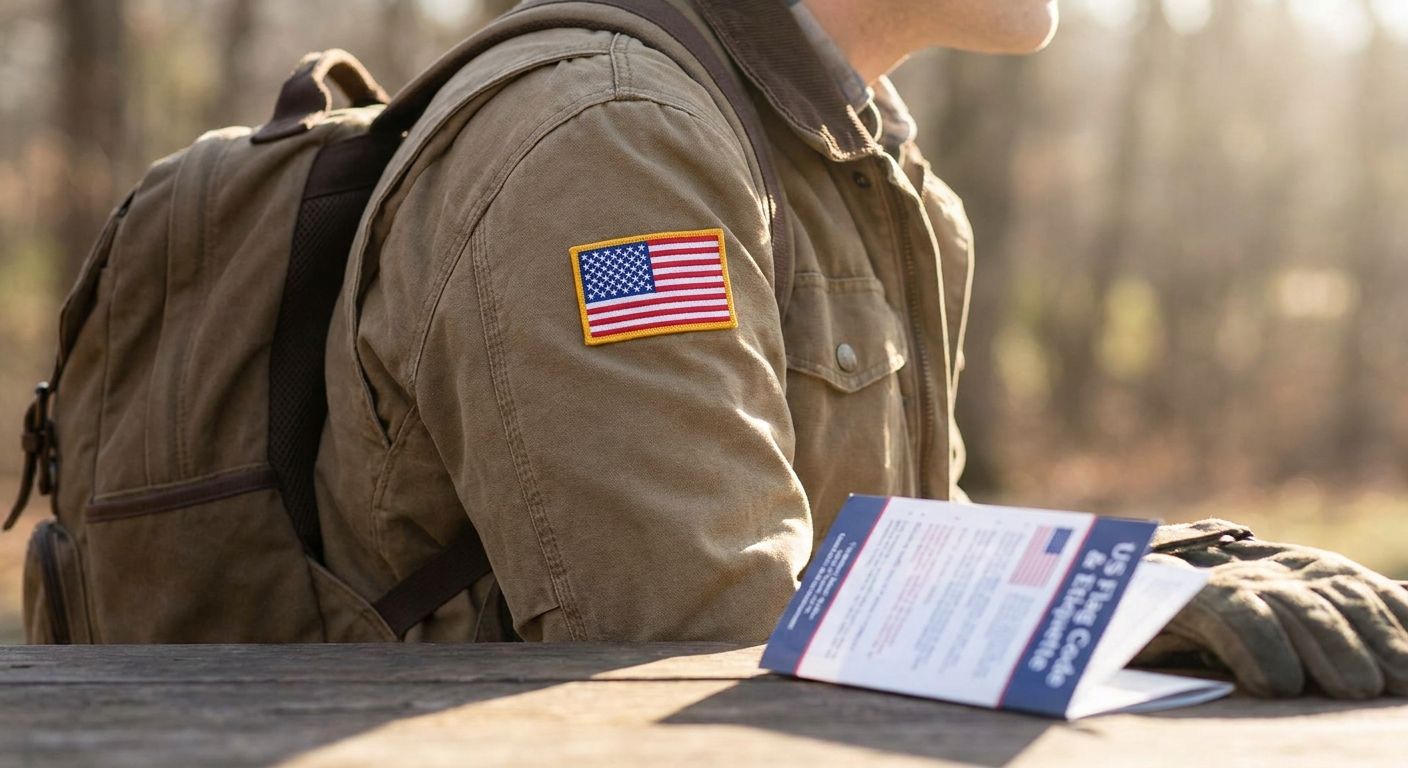
The field of stars faces forward on a moving flag - like a flag flying off a pole into the wind. On a right-side patch (sleeve, right side of a jacket), the stars go on the wearer's right shoulder, making the flag look like it's flying forward as you walk. This is the single most common flag etiquette on clothing mistake people make with tactical patches, and it's an easy fifteen-second check before you sew or Velcro anything on.
3. Match the piece to the occasion
A flag hoodie works for a tailgate, a range day, or a Fourth of July cookout. A flag polo or button-down reads better for a retirement ceremony or a memorial event. Nobody enforces this, but matching tone to occasion is what keeps flag apparel looking intentional instead of thrown-on.
4. Wash flag-print gear cold and inside out
Heat and direct agitation break down screen-print pigment fastest, and a red-white-and-blue print that fades to pink and gray within a year looks worse than no flag at all. Cold water, inside-out, and air-dry adds real life to the print. Skip the dryer's high-heat setting entirely if you want the design to survive past one season.
5. Store apparel flat or hung, not balled up
A flag hoodie stuffed in the bottom of a drawer for six months will crease along the fold lines, and a cracked print looks like neglect. Hang it or fold it flat on a shelf. This is a five-second habit that adds years to a shirt you'll wear every summer.
6. Retire what's too worn to represent well
When a flag shirt is torn, permanently stained, or faded past recognition, retire it rather than keep wearing it as a rag or donating it as-is. Many VFW posts, American Legion chapters, and Boy Scout troops hold flag retirement ceremonies and will take worn textile flags along with actual cloth flags. This isn't a legal requirement for printed apparel, but it's the same instinct that makes flag etiquette on clothing matter in the first place.
7. Buy from sources that get the details right
A flag print that's off-register, off-color, or stretched wrong on a cheap import tee tells you the maker didn't care about the details. If authenticity matters to you, spotting authentic veteran-owned apparel brands walks through what separates a brand that respects the flag from one just chasing a trend.
Troubleshooting
Print faded after two or three washes. You likely washed it hot, in direct sunlight while drying, or inside a load with heavy zippers and buttons that abrade the print. Switch to cold, inside-out, air-dry going forward - the damage already done can't be reversed.
Someone says printed flags on shirts are "illegal." They're not. The U.S. Flag Code has no enforcement mechanism for apparel, and the 1989 Texas v. Johnson ruling confirmed flag-related rules aren't criminally punishable. The Flag Code was written for physical flags on poles, not screen prints.
Patch or pin looks backward to some people. Check which shoulder it's on. Right shoulder means stars forward (facing the wearer's front), left shoulder means the standard left-to-right flag orientation. Reversed prints get flagged (no pun intended) by anyone who's spent time in uniform.
A design feels disrespectful but you can't say why. Trust that instinct - flags used as tablecloths, costumes, or disposable party gear tend to draw criticism even without a legal basis, because it reads as a lack of care rather than pride.
Flag apparel doesn't match the event. A loud flag-grenade graphic tee isn't wrong to own, but save it for a tailgate or range day rather than a memorial service. Tone-matching is etiquette even when it's not written in any code.
Tools and resources
- The full text of the U.S. Flag Code, Title 4, Chapter 1, U.S. Code (1942)
- Your local VFW post or American Legion chapter for flag retirement guidance
- A cold-wash, inside-out laundry routine for any flag-print hoodie or tee
- Grunt Style's patriotic apparel lineup, built around durable prints rather than one-season novelty graphics
- 4th of July t-shirts for men if you're shopping ahead of the holiday rather than fixing gear you already own
“The flag represents a living country and is itself considered a living thing.”
What to do next
Once the basics of flag etiquette on clothing are locked in, the next move is building a rotation that covers more than one holiday. The patriotic wardrobe capsule guide walks through picking pieces that carry you from Memorial Day through Veterans Day without repeating the same three shirts every year.
FAQ
Is it disrespectful to wear a flag t-shirt?
No - the U.S. Flag Code was written for physical flags, not printed apparel, and courts have confirmed since 1989 there's no penalty for how you wear a flag design. Fit, orientation, and occasion still matter for how it reads to others.
What's the correct way to wear a flag patch on a jacket?
On a right-shoulder patch, the field of stars faces forward so the flag looks like it's flying as you move. A backward-facing patch is the most common flag etiquette on clothing mistake on tactical gear.
Can you legally be punished for wearing the flag incorrectly?
No. The 1989 Supreme Court ruling in Texas v. Johnson established that flag-related conduct, including apparel, carries no criminal penalty in the United States.
How do you keep a flag print from fading?
Wash cold and inside out, then air-dry instead of using high heat. Heat and agitation break down the pigment fastest and can fade a print within a single year of regular washing.
What do you do with a worn-out flag shirt?
Retire it rather than keep wearing it as a rag. Many VFW posts and American Legion chapters hold flag retirement ceremonies that also accept worn textile flag items.
Is it okay to wear a flag shirt to a funeral or memorial?
A simpler, more subdued flag design reads better for a memorial service than a bold graphic tee. Match the tone of the piece to the occasion rather than treating all flag apparel the same.
Does the flag on a shirt need exactly 50 stars and 13 stripes?
A literal reproduction should have 50 stars in 9 rows and 13 stripes, but stylized or novelty designs that stretch the layout for graphic purposes aren't a violation - they're just not a literal flag reproduction.
Where can I find veteran-owned brands that get flag details right?
Look for consistent color registration, correct star and stripe counts on literal reproductions, and print quality that holds up past a few washes - all signs a brand invested in getting the flag right rather than cutting corners.
One last thing
Most complaints about flag apparel aren't about legality - they're about a backward patch or a print that faded to pastel pink after one summer of cold washes gone wrong with hot water. Get the orientation and the wash routine right, and flag etiquette on clothing stops being a debate and just becomes how you dress in 2026.