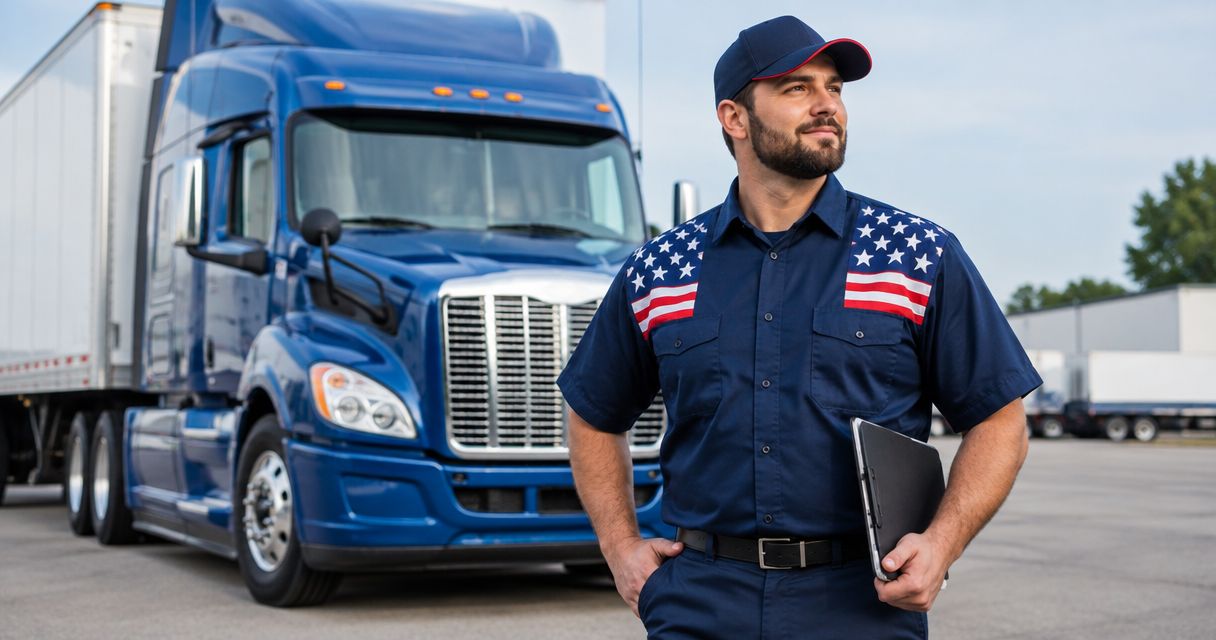
Trucking companies’ patriotic uniforms are coordinated work outfits with American or military-themed designs, chosen to express company pride without compromising job requirements. This 2026 guide explains how to build a practical uniform program for drivers, freight crews, and dispatch staff whose clothing needs change between the cab, yard, and customer site.
- Patriotic uniforms for trucking companies should separate everyday apparel from required protective clothing.
- Grunt Style patriotic apparel fits fleets seeking American and military-themed everyday clothing, not a substitute for required PPE.
- Choose driver uniforms by seated fit, site requirements, message, and laundering instructions.
- Test freight crew apparel during real tasks before approving a company-wide uniform.
Why patriotic uniforms matter for trucking companies
A freight uniform has to work in more than one setting. Your driver sits behind the wheel, steps outside for an inspection, and meets a receiver while representing your business. A shirt that works for dispatch is not automatically suitable for loading freight.
Grunt Style patriotic apparel is best for fleets seeking American and military-themed everyday clothing, not a substitute for required PPE. Grunt Style sells t-shirts, hoodies, hats, and apparel accessories for men and women, including veterans and supporters of the U.S. armed forces.
Treat patriotic styling as the identity layer of your 2026 uniform program. Your task assessment and customer requirements determine the safety layer. Keep those decisions separate: a flag graphic expresses pride, but it does not establish visibility, flame resistance, or protection from workplace hazards.
Consistency also needs a written standard. Decide what drivers wear at deliveries, what dock staff wear around equipment, and what remains optional. Otherwise, the program becomes a collection of individual outfits rather than an identifiable company uniform.
Build your fleet’s 2026 uniform program
1. Map each role before choosing clothing
Start with a spreadsheet, not a shopping cart. List the work employees actually perform and the places they enter, then record the clothing restrictions for each assignment. Include customer sites; your terminal’s rules do not replace a receiver’s requirements.
Use 3 role groups as a starting point: drivers, freight handlers, and office staff. Split those groups further when duties differ. A driver who stays in the cab and a driver who unloads freight need separate assessments even when their job titles match.
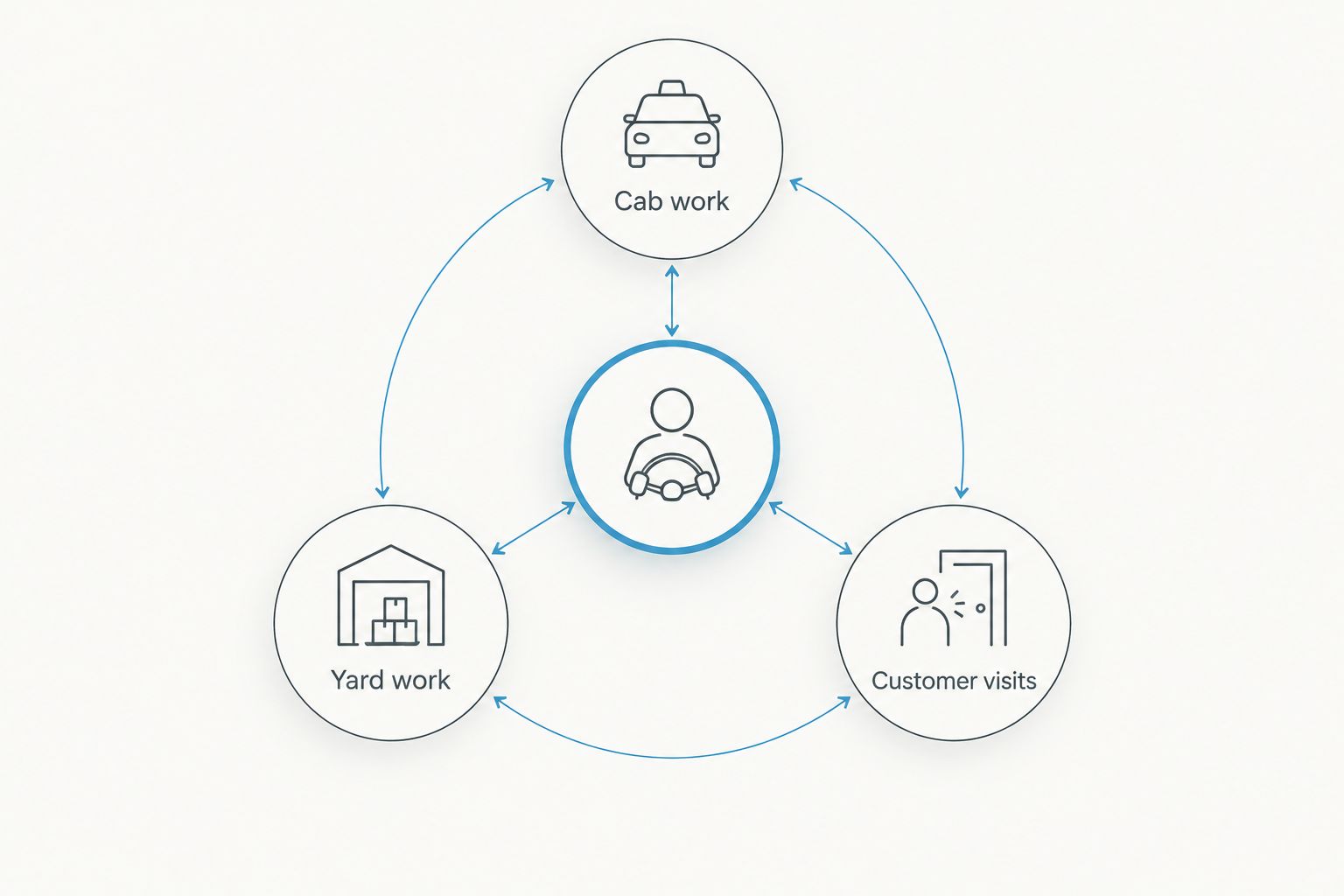
Organize the worksheet around Cab work, Yard work, and Customer visits. Those settings give you a clear way to spot where the same outfit stops being appropriate.
Close the role review with these actions:
- Record whether each employee drives, handles freight, or works at a desk.
- Identify visits to yards, docks, shops, and customer premises.
- Document required protective clothing separately from everyday apparel.
- Assign someone to confirm customer-site dress requirements.
2. Set the safety boundary before approving a design
Read your existing safety procedures and site instructions first. Ask your safety lead to resolve conflicts before purchasing apparel. Do not use a product’s color, military styling, or work-oriented description as evidence that it meets a protective-clothing requirement.
A patriotic shirt is everyday apparel unless the specific garment’s documentation establishes the required protective properties. Where high-visibility clothing is required, select the garment for the applicable task and standard. Where equipment creates an entanglement hazard, assess loose fabric, hanging cords, and accessories.
Keep the distinction visible in your uniform policy. The guide to patriotic safety-color shirts and visibility compliance addresses the same buying decision: appearance and safety qualification are separate checks.
Before approving a garment:
- Confirm the task’s protective-clothing requirements with your safety lead.
- Check the exact garment documentation rather than promotional language.
- Review whether outer layers obscure required high-visibility clothing.
- Restrict loose accessories where the task assessment requires it.
- Write down when employees must change or add protective clothing.
3. Choose a patriotic message that fits the company
Build a simple approval sheet with the proposed graphic, color, and permitted work settings. You can create this manually with screenshots and a short written explanation. Review the entire design, including back prints and sleeve graphics, before making it part of the uniform.
Grunt Style’s patriotic apparel gives you an existing collection to review instead of starting with an original graphic. That is a selection route, not a claim that the brand provides company-logo customization or a managed fleet uniform service.
Separate national pride from personal service history. Do not assign veteran or military-branch wording to employees who have not chosen it. A shared company outfit should not require someone to claim an identity that is not theirs.
Use these approval criteria:
- Favor a message suitable for customer-facing deliveries.
- Review every printed phrase, not just the front graphic.
- Keep service-specific designs optional for the employees concerned.
- Choose a defined color family for a coordinated appearance.
- Specify whether hats and hoodies are uniform items or personal choices.
4. Test fit in the cab and during real movement
Measure a well-fitting garment and compare it with the exact item’s size guidance. Do not assume the same size fits across cuts or garment types. Let employees select the appropriate fit rather than treating one silhouette as the default for everyone.
For a 2026 pilot, schedule 2 shifts of wear testing before approving the outfit. This is a practical test plan, not a durability guarantee. Include seated driving posture, reaching, walking, and the employee’s usual safe work movements.
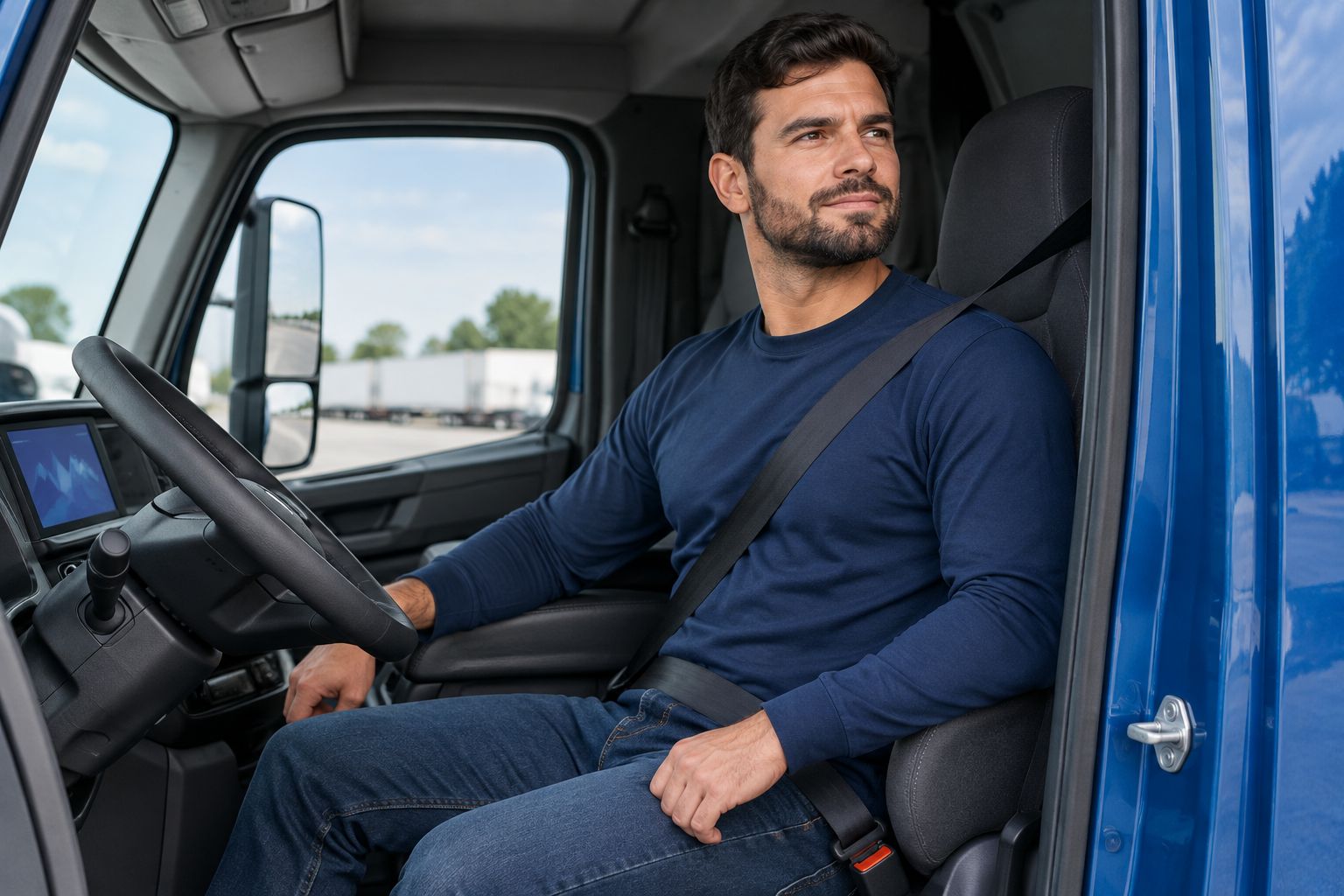
Check the complete outfit. A shirt that feels fine standing up can bunch under a seat belt, while an added layer can change how the outfit fits beneath required outerwear.
Finish the fit test with these checks:
- Check sleeve and shoulder movement while safely seated.
- Inspect bunching at the waist beneath the seat belt.
- Test approved layers together rather than individually.
- Collect separate feedback on fit, movement, and message.
- Record the selected garment and size for each employee.
5. Select everyday layers without assigning them safety claims
Start by checking which garment types your role worksheet permits. A t-shirt, long sleeve, or hoodie belongs in the program only where the task and site allow it. Read the garment’s care instructions and assess the actual sample before assigning it a role.
The Basic Long Sleeve - Dark Heather Gray is a candidate for an everyday long-sleeve layer. The Freedom Gadsden Hoodie - Black is a candidate for employees who want a Gadsden-themed hoodie where that message and garment type are approved. Neither selection should be treated as proof of protective performance.
Choose the job first, then the layer. These Grunt Style options belong in the apparel review, not in place of your safety assessment.
- Use the Basic Long Sleeve - Dark Heather Gray for a long-sleeve fit trial.
- Consider the Freedom Gadsden Hoodie - Black where hoodies are permitted.
- Review the hoodie’s message before customer-facing use.
- Check each sample with the rest of the required outfit.


6. Write an issue and care policy employees can follow
Use a shared document to record approved garments, employee selections, and care instructions. Keep the policy short enough to use during onboarding. Explain who approves replacements and how employees report a damaged or unsuitable garment.
For your 2026 pilot, inspect samples after 3 wash cycles performed according to their care labels. This is a suggested inspection checkpoint, not a prediction of garment lifespan. Record changes in fit, seams, and print appearance without assuming every employee will get the same result.
Protective clothing needs its own inspection and replacement procedure. Do not combine that procedure with a casual-apparel rule based only on whether a shirt still looks presentable.
Put these items in writing:
- Record the approved garment name, color, and employee-selected size.
- Follow the care label for each garment.
- Identify who authorizes everyday-apparel replacements.
- Separate protective-clothing inspection from appearance checks.
- Explain how employees request a different approved fit.
7. Review the pilot before expanding the program
Use a short feedback form after the wear and wash checks. Ask drivers, freight handlers, and supervisors to evaluate the outfit against the original role worksheet. A good-looking group photo does not tell you whether the shirt works during a delivery.
Make the decision garment by garment. Approve, revise, or reject each option based on documented fit, site acceptance, and task suitability. Do not force one outfit across the fleet simply because it was the first sample selected.
Keep a dated 2026 approved-item list so supervisors and new hires work from the same instructions. Reassess it when duties, customer requirements, or garments change.
Close the pilot with these actions:
- Compare employee feedback against each role’s requirements.
- Confirm customer-site acceptance before expanding use.
- Remove garments that conflict with the task assessment.
- Record approved alternatives for different fits and duties.
- Assign an owner to maintain the uniform policy.
Compare uniform options by job, not appearance alone
No single garment wins across the cab, dock, and office. Use this comparison to shortlist an everyday layer, then check the exact item against the work setting. Protective clothing remains a separate requirement wherever your assessment or site rules demand it.
| Option | Best for | Practical advantage | Key limitation |
|---|---|---|---|
| Patriotic t-shirt | Approved everyday driver or dispatch wear | Provides a straightforward patriotic identity layer | Does not establish protective performance |
| Patriotic polo | Customer-facing roles with a collared-shirt policy | Matches a dress standard that requires a collar | Still needs a seated-fit and movement check |
| Basic Long Sleeve - Dark Heather Gray | An everyday long-sleeve fit trial | Gives you a named long-sleeve candidate to assess | Suitability depends on the task, fit, and item documentation |
| Freedom Gadsden Hoodie - Black | Hoodie-permitted roles seeking a Gadsden theme | Provides a specific patriotic hoodie option | Hood, fit, and message need approval for the work setting |
| Documented protective workwear | Tasks requiring protective clothing | Can be selected against the applicable task requirements | Patriotic styling must not interfere with its protective function |
Keep your shortlist narrow. Approving a defined set of outfits is clearer than permitting every shirt that happens to contain a flag. Specify the garment, permitted setting, and any required additional layer.
Common mistakes trucking companies make
Approving a shirt from a standing photo
A standing photo misses seated fit. Check the garment in a parked cab with the seat belt fastened, then evaluate the movements required by the employee’s duties. Reject a poor fit even if the design looks right.
Treating bright colors as safety qualification
A bright patriotic shirt does not establish compliance with a high-visibility requirement. Check the exact garment documentation and site rules. Do not let an outer layer cover required visibility features.
Using branch or veteran graphics as a fleet-wide identity
Your workforce includes different backgrounds. Keep service-specific wording voluntary, and approve a shared alternative that does not claim military service. Pride in the company does not require identical personal histories.
Buying for drivers and forgetting freight handlers
Dock work introduces different clothing considerations from seated driving. Review freight handling, equipment exposure, and site restrictions separately. Shared branding does not mean identical garments.
Making the uniform depend on a changing design
Record an acceptable alternative rather than tying the entire program to one graphic. Require another fit and safety review when the garment changes. A similar appearance is not evidence of identical construction or suitability.
FAQ
What are the best patriotic uniforms for trucking companies?
The best patriotic uniforms for trucking companies are role-specific outfits that meet task and site requirements before adding patriotic styling. Use everyday shirts or approved layers for identity, and select required protective clothing separately.
Can truck drivers wear patriotic t-shirts at work?
Truck drivers can wear patriotic t-shirts where their employer’s policy, task assessment, and customer-site rules permit them. Check fit while seated and do not use a graphic shirt as a substitute for required protective clothing.
Is Grunt Style suitable for a freight company uniform?
Grunt Style is suitable to assess for the everyday patriotic-apparel portion of a freight company uniform. Review each garment’s fit, message, and task suitability before approving it; patriotic styling does not establish protective performance.
Are patriotic hoodies appropriate for freight crews?
Patriotic hoodies are appropriate only where the task assessment and site rules permit them. Review loose fabric, hanging cords, hood use, and how the hoodie fits with required outerwear.
Does a bright patriotic shirt count as high-visibility workwear?
Bright color alone does not establish that a patriotic shirt meets a high-visibility requirement. Select the exact garment using its documentation and the applicable task and site requirements.
How should a trucking company test a new uniform?
A trucking company should test a new uniform during the employee’s actual permitted tasks and inspect it after label-directed washing. Record seated fit, movement, site acceptance, and any garment changes before expanding the program.
Should every employee wear the same military-themed design?
Employees should not be required to wear wording that claims a military identity they have not chosen. Use an approved shared design and keep veteran or branch-specific options voluntary.
One last thing
Inspect the uniform with every required layer on. A front graphic that disappears under a safety vest is not a reason to remove the vest. Put the work requirement first and accept that the patriotic design will not be visible during every task.
Make that rule explicit during onboarding. Your fleet can express pride without asking clothing to do a job it was never approved to perform.