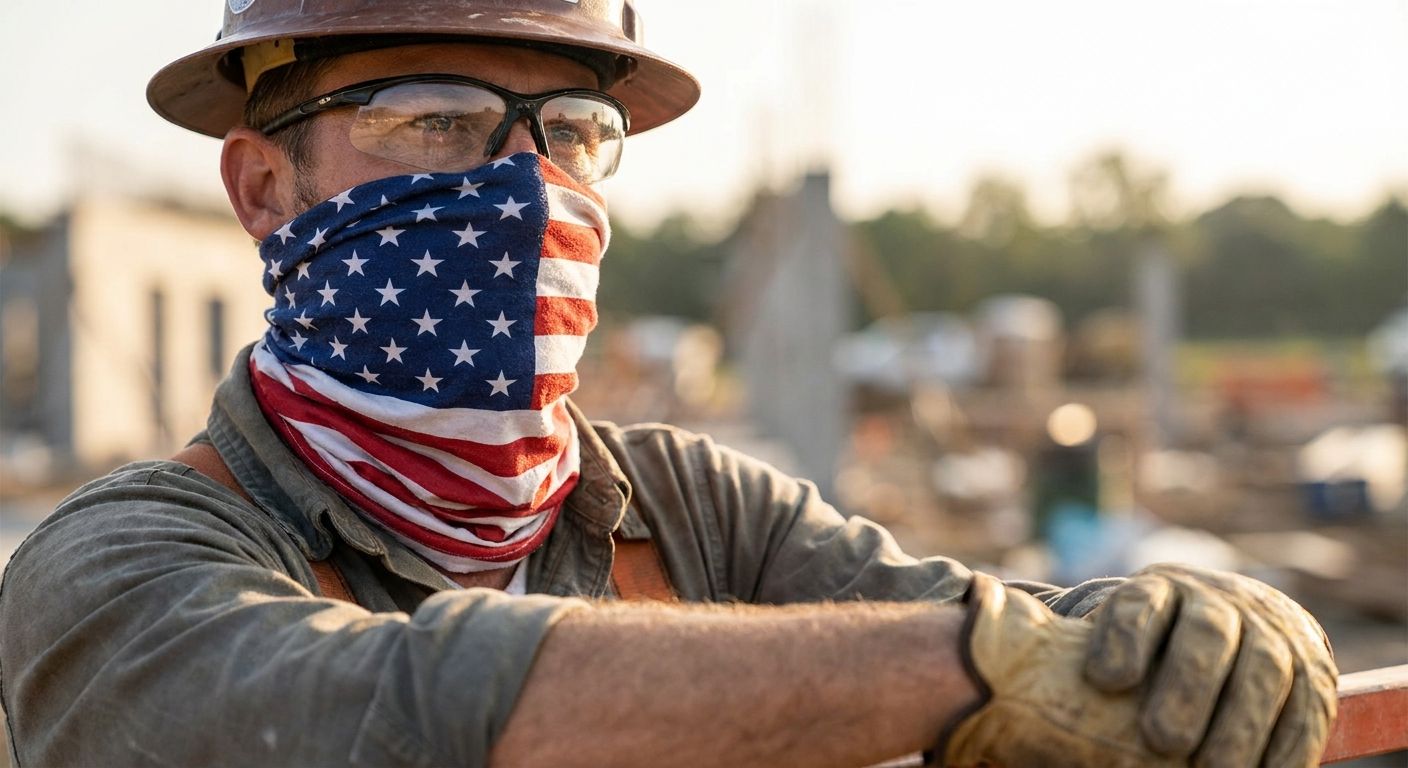
Picking a patriotic neck gaiter for outdoor work comes down to matching fabric to the job — cold roofs, sunny job sites, dusty lots, or all-day ranch work each demand a different build, and one flag print does not fit every task.
- A moisture-wicking polyester patriotic neck gaiter is the best overall pick for year-round outdoor work in 2026.
- Fleece-lined thermal gaiters win for cold-weather jobsites; UPF 50+ builds win for high-sun crews.
- Merino wool blends handle temperature swings best for ranch and field work that runs dawn to dusk.
- A lightweight cotton-blend gaiter is the budget pick for dust and debris protection on construction sites.
Why this matters
A neck gaiter isn't a fashion accessory when you're working outside eight-plus hours a day — it's sun barrier, wind block, dust mask, and cold-weather layer rolled into one piece of fabric. Buying the wrong build means a gaiter that soaks through in July or one that does nothing for windburn in January.
The patriotic print matters too, but it shouldn't come at the cost of function. A flag design that fades after three washes or a fabric that traps sweat against your neck all day isn't worth wearing on a jobsite, no matter how good it looks in the mirror. This guide ranks gaiter styles by the outdoor work they're actually built for, and points you to complementary layering pieces — like the patriotic gear built for camping and the outdoors — so your whole kit matches the job, not just the neckwear.
What makes the best patriotic neck gaiter for outdoor work
- Fabric weight and breathability — lighter weaves (under 150 GSM) move heat; heavier fleece (200-300 GSM) traps it
- UPF rating — UPF 50+ blocks roughly 98% of UV radiation, the standard most sun-protection apparel targets
- Moisture-wicking performance — polyester and polyester blends pull sweat away from skin faster than cotton
- Coverage and stretch — a gaiter should cover from below the eyes to the collarbone without slipping when you turn your head
- Print durability — sublimated dye holds flag colors through repeated washing better than a screen-printed overlay
- Multi-way styling — the best builds double as a headband, balaclava, or hood liner without extra gear
Patriotic neck gaiters for outdoor work: at a glance
| Style | Best for | Standout feature | Key limitation |
|---|---|---|---|
| Moisture-wicking polyester gaiter | Year-round jobsite wear | Dries fast, breathes in heat | Less insulation below freezing |
| Fleece-lined thermal gaiter | Cold-weather outdoor work | Traps body heat, blocks wind | Overheats above 50°F |
| UPF 50+ sun gaiter | High-UV exposure jobs | Blocks ~98% of UV rays | Thin fabric offers little wind protection |
| Merino wool blend gaiter | Variable-temperature work | Regulates temp dawn to dusk | Higher care requirements than synthetics |
| Lightweight cotton-blend gaiter | Dust and debris protection | Breathable, low cost | Slower to dry when sweat-soaked |
1. Moisture-wicking polyester gaiter: best patriotic neck gaiter overall
A polyester or polyester-spandex blend gaiter is built to pull sweat off your skin and evaporate it fast, which is why it shows up across nearly every outdoor-work category from landscaping crews to line workers. It stretches to cover nose-to-collarbone and holds a sublimated flag print through repeated wash cycles without cracking.
Moisture-wicking gaiter pros:
- Dries fast between shifts, even in humid climates
- Sublimated prints hold color longer than screen-printed cotton
- Stretch fit works as a headband, face cover, or hood liner
- Machine washable without special care
Moisture-wicking gaiter cons:
- Thin build offers minimal insulation below freezing
- Some polyester blends trap odor faster than merino wool
Best for: crews working mixed conditions — hot mornings, cool evenings — who need one piece of gear that covers most of the year.
Verdict: Buy.
2. Fleece-lined thermal gaiter: best for cold-weather jobsites
A fleece-lined gaiter in the 200-300 GSM range traps body heat against the neck and lower face, which matters most for roofing, utility, and outdoor construction crews working through winter. Pair it with a layered patriotic hoodie for full-torso warmth on the coldest shifts — the same logic behind layering patriotic hoodies for fall applies directly to gaiter layering underneath a hood.
Fleece-lined gaiter pros:
- Blocks wind chill better than any other style on this list
- Doubles as a balaclava when pulled up over the nose
- Heavier fabric holds a bold flag print without stretching thin
Fleece-lined gaiter cons:
- Overheats fast once temperatures climb above 50°F
- Bulkier fit under tight collars or hard-hat straps
Best for: outdoor crews facing sub-40°F mornings on roofs, utility poles, or open lots through the winter months of 2026.
Verdict: Buy for cold climates, Skip for year-round use.
3. UPF 50+ sun gaiter: best for high-UV exposure jobs
A UPF 50+ rated gaiter blocks about 98% of UV radiation, the same benchmark used across sun-protective apparel generally. It's the right call for road crews, farm labor, fishing guides, and anyone logging long hours under direct sun where sunburn and heat exposure are the bigger risk than cold.
UPF sun gaiter pros:
- Meaningful UV protection for all-day sun exposure
- Lightweight fabric breathes better than fleece
- Works as a face and neck shield during high-heat shifts
UPF sun gaiter cons:
- Offers almost no wind or cold protection
- Thinner fabric shows print wear faster under heavy sweat
Best for: crews working full sun exposure — road work, agriculture, hunting stands — where UV, not cold, is the daily concern. It also pairs well with gear built for range days, like the picks in patriotic gear for gun range day.
Verdict: Buy for sun-heavy work.
4. Merino wool blend gaiter: best for variable-temperature work
Merino wool blends regulate temperature naturally — warm when it's cold, breathable when it warms up — which makes this style the pick for anyone whose shift swings 30+ degrees between sunrise and midday. It's a common choice for hunting and ranch work where dawn starts cold and afternoon runs warm.
Merino gaiter pros:
- Handles temperature swings without changing gear
- Naturally resists odor buildup across long shifts
- Soft against skin, less irritation than synthetic-only blends
Merino gaiter cons:
- Requires more careful washing than polyester or cotton blends
- Usually the priciest fabric option in this category
Best for: hunters, ranch hands, and deer camp crews working outdoors from early morning through evening — the same audience covered in patriotic hoodies for deer camp and hunting trips.
Verdict: Buy if budget allows.
5. Lightweight cotton-blend gaiter: best budget option
A cotton-blend gaiter costs less to produce and buy, and it does a fine job blocking dust, sawdust, and debris on construction and demolition sites. It's not the top performer on sweat control, but for short shifts or lower-exertion outdoor work it covers the basics.
Cotton-blend gaiter pros:
- Lowest cost entry point into this category
- Breathable in mild, dry conditions
- Simple to wash and replace often
Cotton-blend gaiter cons:
- Holds moisture longer than polyester once soaked
- Print wears faster with frequent washing
Best for: short-duration outdoor tasks — mowing, sanding, light dusty work — where budget matters more than all-day performance. EMS and paramedic crews needing a quick dust barrier between calls fall into a similar bucket, covered in patriotic gear for EMS crews.
Verdict: Hold — fine as a backup, not your primary gaiter.
How this ranking works
Each style is ranked against the six criteria above — fabric weight, UPF rating, moisture-wicking, coverage, print durability, and multi-way styling — matched to the outdoor work it fits best. No single gaiter wins every category, which is why this list splits by use case instead of naming one universal "best."
Which patriotic neck gaiter should you choose?
If you only buy one, the moisture-wicking polyester gaiter covers the widest range of outdoor work conditions in 2026 and holds a patriotic print through the most wash cycles. Add a fleece-lined version for winter shifts and a UPF-rated piece if your work runs full sun exposure most of the year. Round out the kit with layering pieces — hoodies, hats, and outerwear built for the same outdoor conditions — so the whole setup, not just the gaiter, holds up to a full shift.
FAQ
What's the best patriotic neck gaiter for outdoor work?
A moisture-wicking polyester patriotic neck gaiter is the best overall choice for outdoor work in 2026 because it handles a wider temperature range than fleece or cotton builds. Swap to a fleece-lined version for sub-40°F conditions.
Is a fleece gaiter better than a polyester one?
Fleece wins for cold-weather work below 50°F because it traps body heat and blocks wind. Polyester wins for everything above that, since it breathes and dries faster.
What does UPF 50+ mean on a neck gaiter?
UPF 50+ means the fabric blocks roughly 98% of UV radiation, a standard benchmark used across sun-protective apparel. It matters most for outdoor crews working full sun exposure for long shifts.
How much does a patriotic neck gaiter cost?
Pricing varies by fabric and brand, so check current listings directly on the retailer's site before buying. Fleece-lined and merino blends generally run higher than basic cotton or polyester versions.
Can a neck gaiter double as a face mask for dusty jobsites?
Yes — most stretch-fit gaiters pull up over the nose and mouth for dust and debris protection. Lightweight cotton-blend versions are the most common choice for this use.
How do you keep the flag print from fading on a neck gaiter?
Wash in cold water and skip the dryer's high heat setting, since sublimated prints hold up longer under gentle care than screen-printed designs. Turning the gaiter inside out before washing also helps.
Do neck gaiters work for cold-weather workouts, not just job sites?
Yes — the same fleece-lined and moisture-wicking builds used for outdoor work translate directly to cold-weather training and outdoor fitness routines. Fit and breathability matter more than the work-specific durability features.
What's the difference between a neck gaiter and a balaclava?
A neck gaiter is a single tube of fabric that covers the neck and can pull up over the face; a balaclava is a fitted hood that covers the full head with an opening for the eyes. Many fleece-lined gaiters function as a lightweight balaclava when pulled all the way up.
One last thing
Most buyers judge a neck gaiter on the print and skip the fabric spec entirely — that's backwards. A UPF 50+ label or a 200+ GSM fleece weight tells you more about how the gaiter performs on an actual 10-hour shift than any flag design ever will, so check the fabric line before the graphic.